In summer as in winter,maintaining the water in a swimming poolis essential to ensure its quality but also to enjoy pleasant swimming moments.
While several solutions exist, salt pools have the advantages of ease of maintenance, respect for the environment and a product that is less aggressive for your eyes and skin.
However, the operating mode and the use of salt for disinfecting and cleaning your pool are not similar to chlorine or bromine. So, how does a maintenance for your pool salted ?
Daily maintenance of a salt pool
Althoughsaltwater pool treatmentmakes it easier to maintain clean and healthy water, it is still important to understand how it works. Indeed, thanks tofiltrationandthe installation of an electrolyzer, the salt will pass through a filter to turn into chlorine, before returning to the pool water. After this step and in contact with sunlight, the chlorine will revert to its salt state.
In parallel with this disinfection process, it is important to check the main data relating to the pool water (pH level, alkalinity level, temperature) in order to maintain its quality.
How much salt in a swimming pool?
It depends on two parameters:
– The volume of waterpresent in the pool which will subsequently determine the pool's salt level;
– The shape of the pool;
Salt levels also depend on daily monitoring of salt concentration, using a salinometer or test strips.
To learn how to calculate the volume of water and salt concentration in your pool, use this table for calculating pool salt needed based on volume:
| Stage | Calculation |
| Calculating the volume of the swimming pool | Rectangular swimming pool: Length x Width x Average height |
| Round pool: Previous volume x 0.78 | |
| Oval pool: Previous volume x 0.89 | |
| Calculating the amount of salt | Salt dosage x Pool volume |
| Calculating salt deficiency | Water volume x Missing salt difference |
| Calculating excess salt | Water height (m) = (1 – (recommended salinity / pool salinity)) x (pool volume / pool surface area) |
Can you put shock chlorine in a salt pool?
As a reminder, water treatment works withsalt electrolysis. In other words, thanks to an electrolyzer, the salt will transform into sodium hypochlorite, a natural form of chlorine.
Thus,using shock chlorineas a product for your saltwater pool has no negative impact and it helps to restore the pH and alkalinity levels (in ppm).
On the other hand, be careful with the dosage of shock chlorine! Too much of this product can lead to an excess of pH or alkalinity, which is just as bad for the quality of your pool water. Indeed, the reason why it is preferable to switch from a chlorine pool to a salt poolis mainly the harmful ecological and sanitary effect of this type of product.
To check this and set the correct chlorine level, use a pH regulator. This will allow you to gradually monitor the different levels and benefit from effective shock chlorine treatment.
Winterizing a salt pool
Wintering: an essential operation to protect your salt pool
When the summer season ends and winter takes hold, it is important to think aboutwinterizing swimming poolsin order to protect their structure, equipment, and especially to find them intact the following spring.
Warning! Winterizing does not mean emptying your pool. It may move and crack under the pressure of the surrounding ground.
But before starting the winterization process, it is recommended to check that thewater temperatureis continuously below15°C. If this temperature is too high, you can neither stop the electrolysis device nor the filtration. Therefore, your salt pool cannot be winterized yet.
The steps for winterizing a salt pool
There are 6 of these steps to effectively protect swimming pool water during the winter:
- Accessories and equipment: ladders, rails, diving boards, slides, or even heat pumps must be removed from your pool. The heat pump should be covered with an appropriate cover. Also remember to turn off all equipment circuits.
- Your pool water: make sure you have enough grams of salt in your pool using test strips. Also check the pH level, which should be between 7.0 and 7.4, and the alkalinity level, which should be between 80 ppm and 120 ppm.
- Clean your saltwater pool water: remove debris and waste from the surface of the water with a skimmer net, then start your pool vacuum for the bottom of the pool. Also, empty and wash the skimmer and filter baskets.
- Specific winterizing products: to prevent the growth of algae and microorganisms, add this type of product to your pool water and run the filtration for at least 8 hours.
- Electrolyser: stop the electrolysis device so as not to damage the plates then disassemble the salt cell. Then clean this cell with a plastic or wooden tool. Once this step is done, store the electrolyser cell in a dry place, away from sunlight.
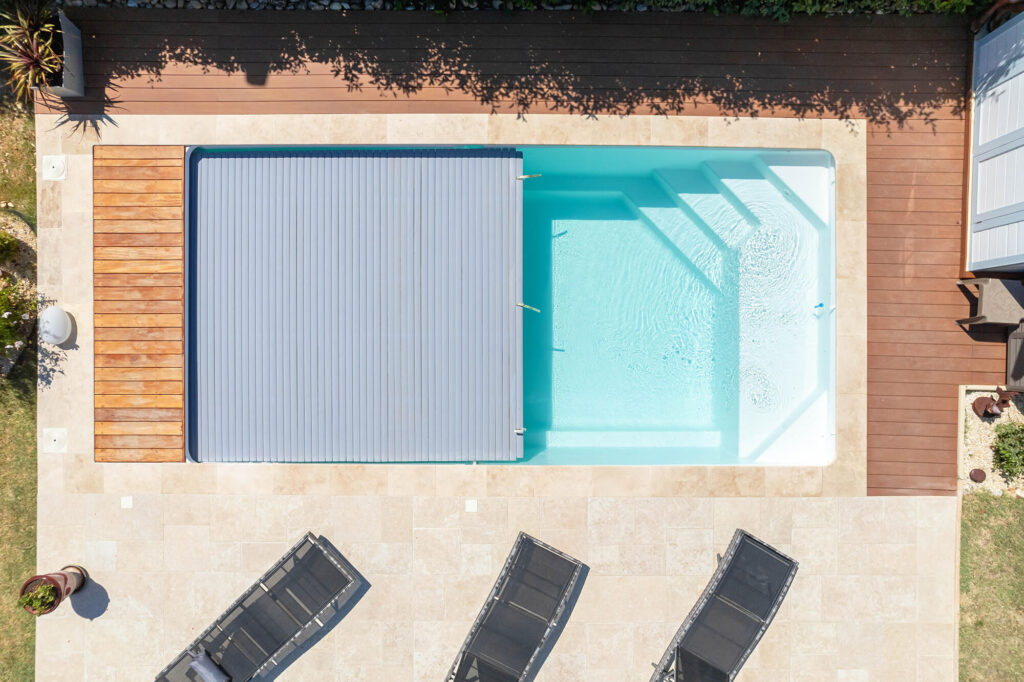
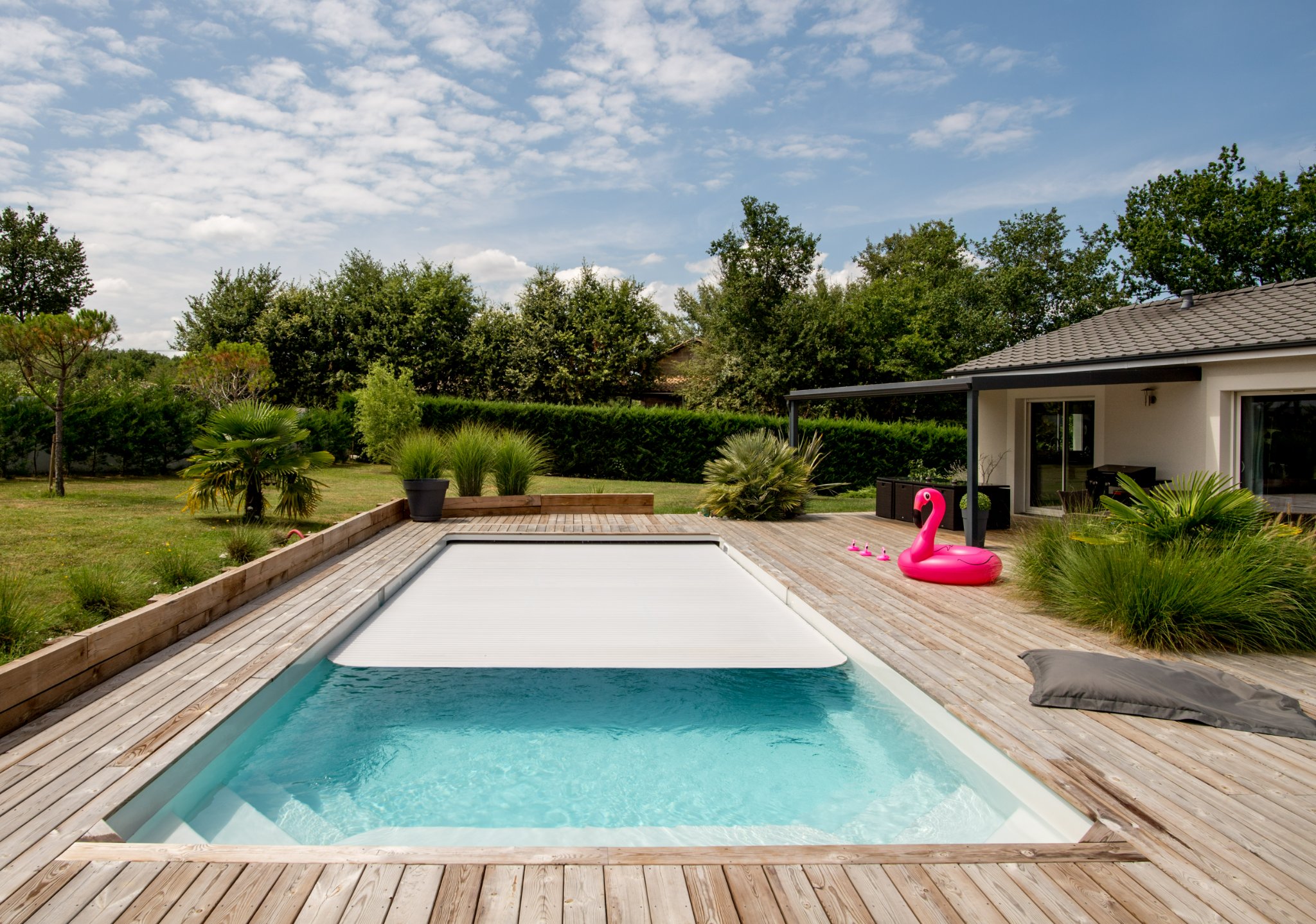
- Cover the pool: equip yourself with a tarp, a cover or an underwater roller shutterto cover your pool. This installation will thus prevent photosynthesis and the development of algae during the winterization process.
Salttreatmentis therefore a very important step in disinfecting and cleaning your pool. Then, by following the steps of the winterization process, your salt pool will be protected during the winter and you can find it intact the following spring.
But don't forget toregularly check the pH regulator and alkalinity level!
Configure your pool online Back to all news