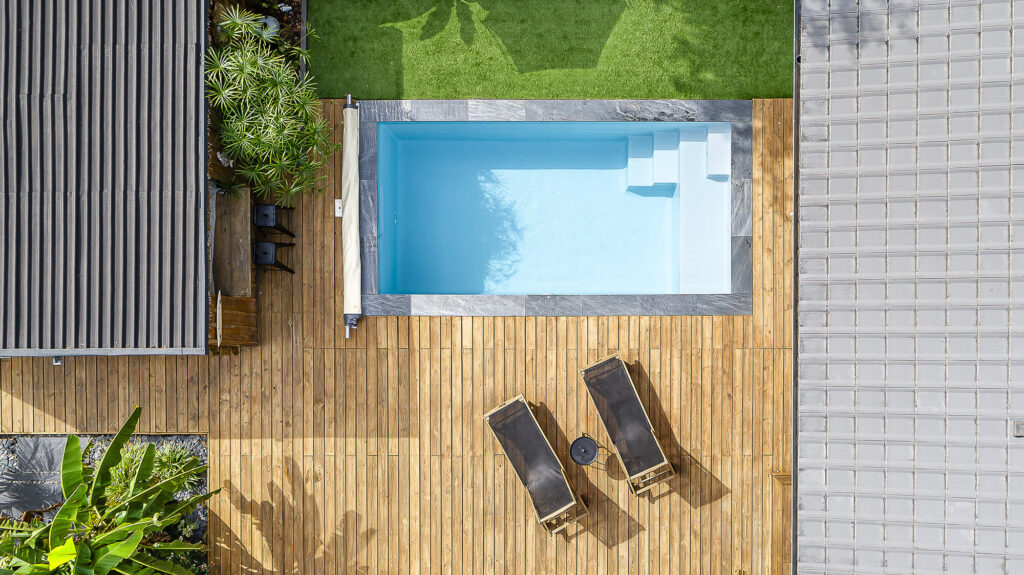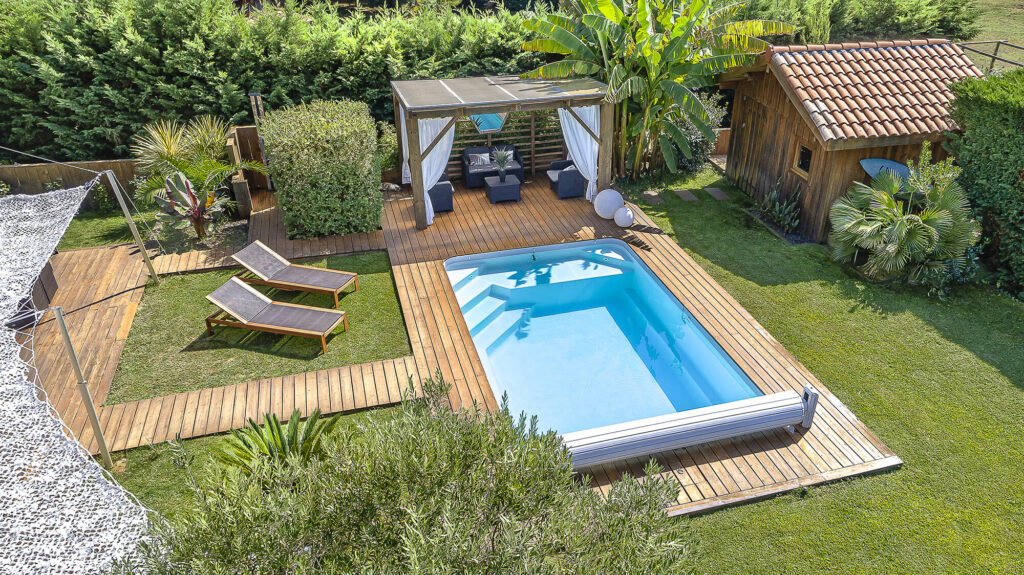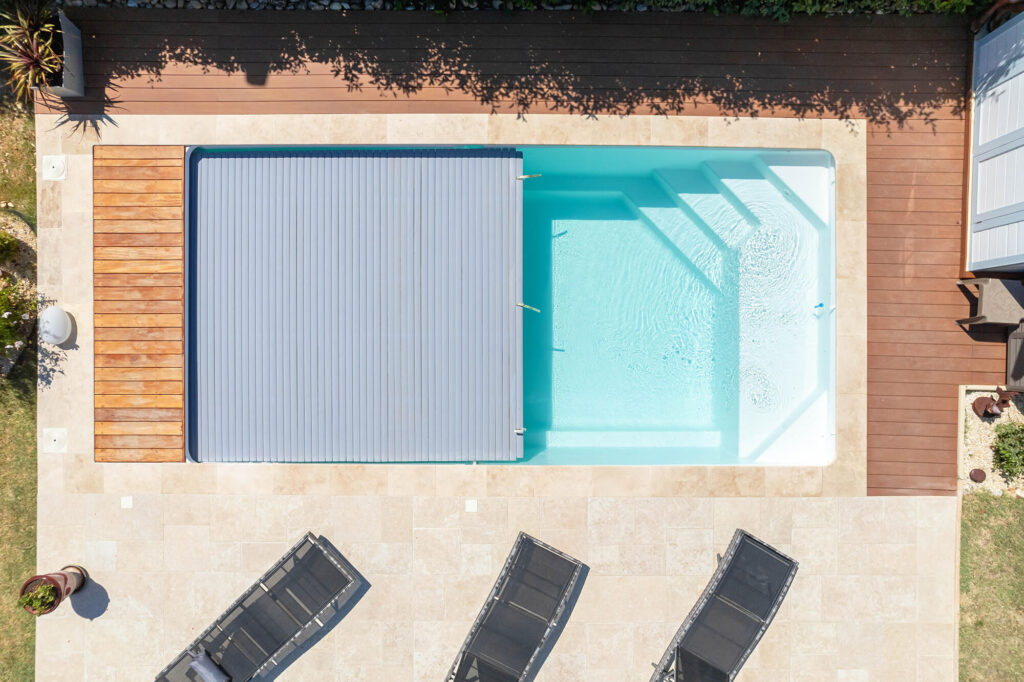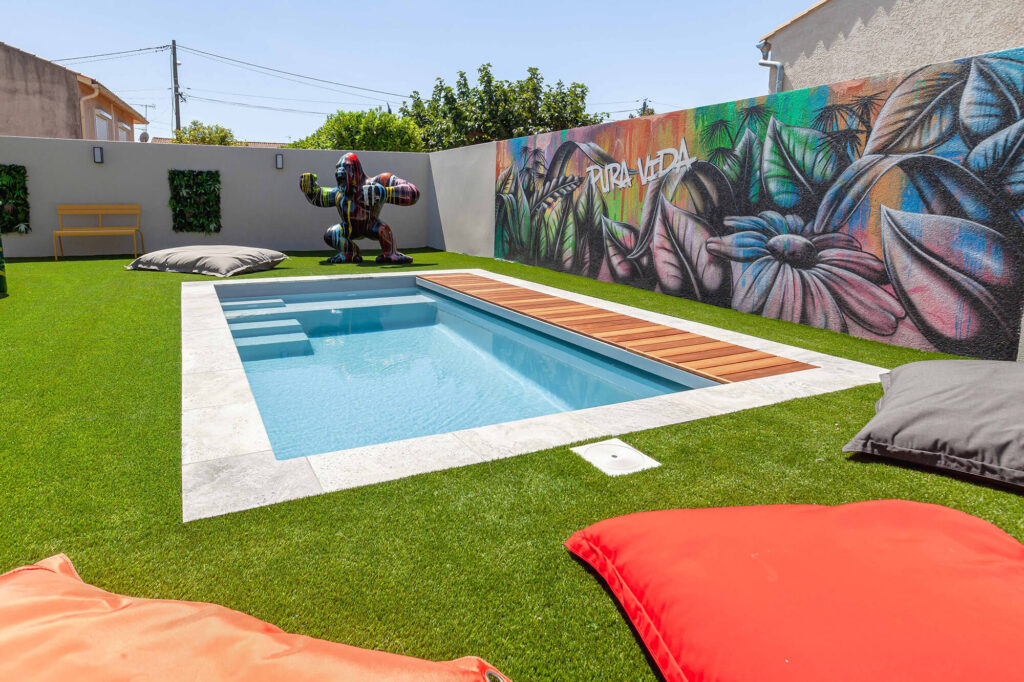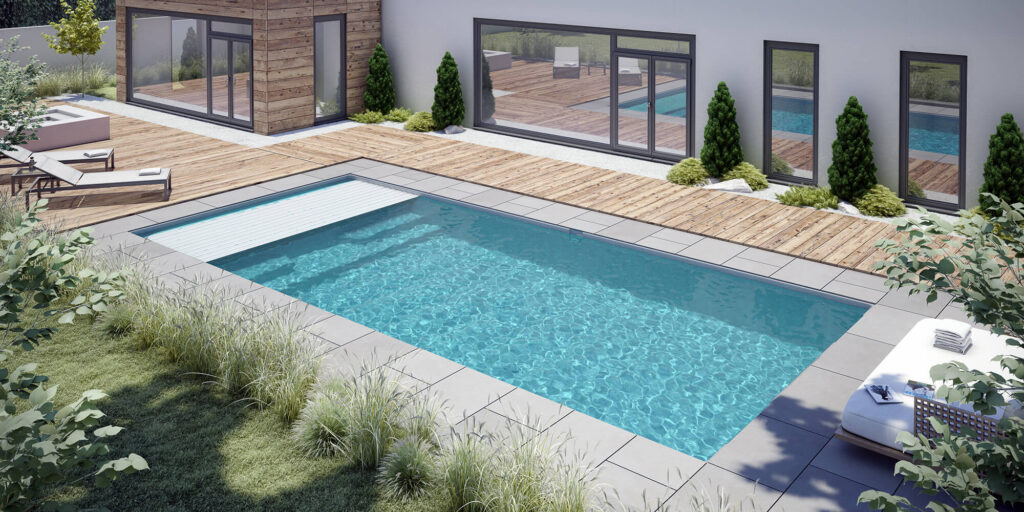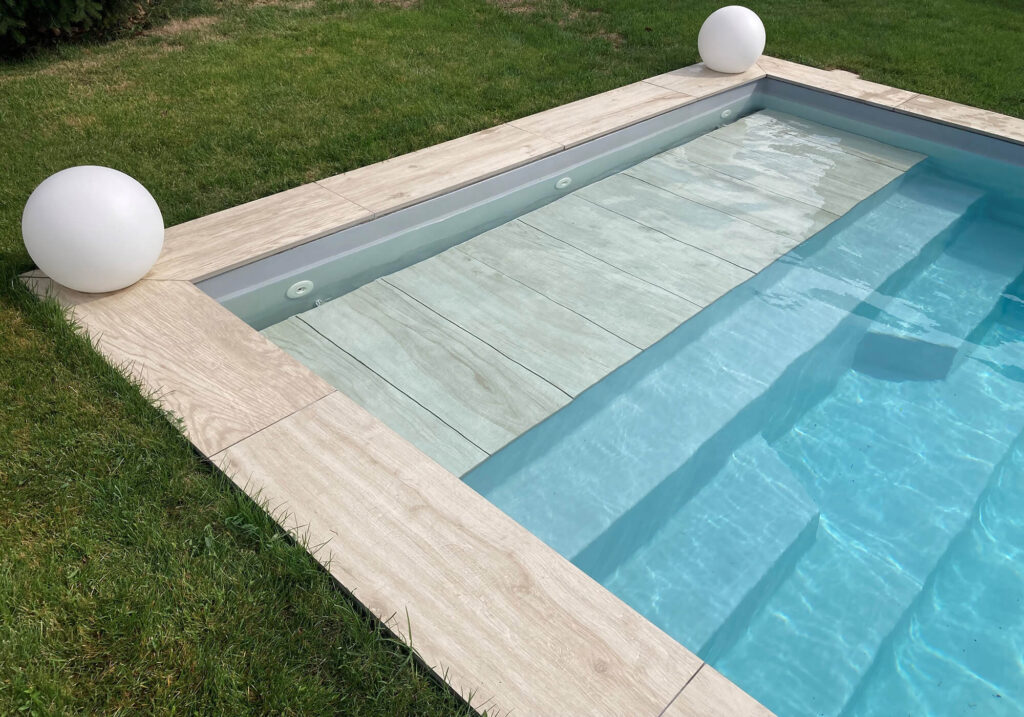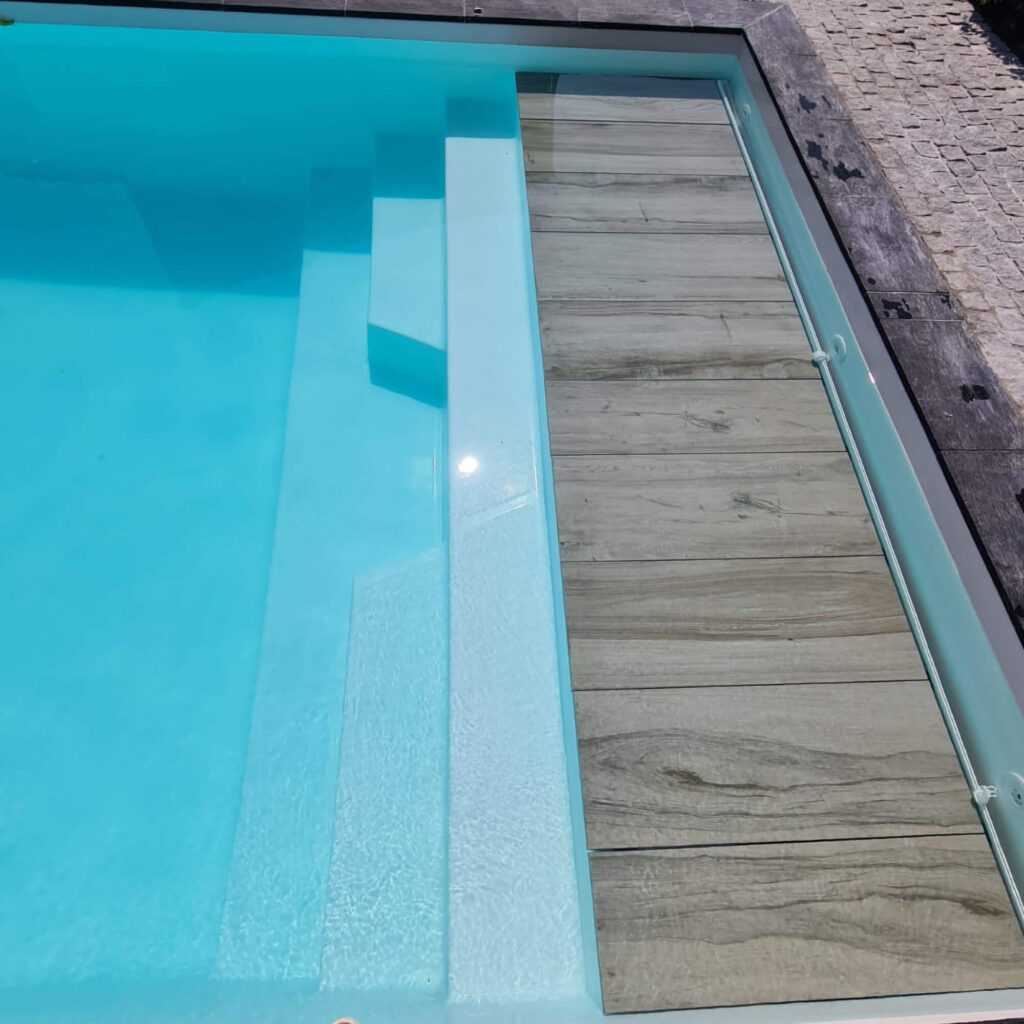
The fiberglass pool, increasingly popular for its speed of installation and relatively simple maintenance, attracts many owners wishing to enjoy a durable and aesthetic pool. However, a question often comes up among future buyers: what is the lifespan of a polyester shell pool?
To answer this question, it is essential to take into account several factors such as maintenance, use but also environmental conditions.
What factors influence the lifespan of a shell pool?
Thelifespan of a polyester shell poolis generally estimated between 20 and 30 years, or even more, provided that rigorous maintenance is followed and quality products are used.
1. Hull quality
The hull quality is essential for ensuring the longevity of your pool. High-quality shells are made from resin layers and fiberglass robust, offering optimal resistance to the elements and wear. Other materials, such asacrylic, are also used for the manufacture of shell swimming pools. Each material has specific characteristics in terms of resistance, aesthetics, and durability, which can influence the choice based on individual needs and preferences.
When purchasing, choose recognized manufacturers to guarantee a durable hull.
2. Professional installation
A good installation is essential to prevent structural problems andextend the lifespan of your pool.
Use qualified professionals to ensure a proper installation, including proper ground preparation and precise hull placement.
3. Regular maintenance
These shells are protected by afinishing gel coatthat guarantees the watertightness of the pool, a composite material specially designed to resist wear and tear over time. In addition to being easy to maintain, it is very resistant. Unlike the liner that covers concrete structures, the coating of thefiberglass shell poolis not likely to be punctured with continued use of the pool.
Although they are particularly strong and resistant, thehull materialsrequire adequate care to maintain their properties.
Therefore,regular maintenanceis crucial to keep the shell in good condition and extend its lifespan. This includes regularly checkingyour pool water, cleaning the bottom of the pool, and maintaining thefiltration system.
The pool water is cloudy, what should I do?
Despite the care given to your pool, the water can sometimes become cloudy. However, a green water or trouble can cause notable degradations on the pool shell if left untreated.
Discover our tips for restoring clear, balanced water to preserve the integrity of your pool.
Why is the pool water cloudy?
When you noticecloudy pool water, what should you do? First, it's important to quickly identify the cause to restore water clarity. Several reasons can explain this phenomenon:
- pH imbalance: A pH that is too high or too low can make the water cloudy. The ideal pH level is between 7.2 and 7.6.
- High or low chlorine levels: Too much or too little disinfectant can cause microorganisms to overgrow.
- Ineffective filtration: Insufficient filtration time or a clogged filter can cause cloudy water.
- Water temperature: Water that is too warm can encourage the proliferation of algae and bacteria.
- High limestone content: A high limestone content can make the water cloudy.
How to get clear water?
To makeyour pool waterregain its clarity, here are the steps to follow:
- Control and adjust the pH: To check the pH, use a test kit. If the pH is unbalanced, add a specific product to adjust the levels: pH adjusters to increase or decrease the pH, as needed.
- Check thechlorine level: Regularly check the chlorine level and add chlorine if necessary to maintain an adequate level.
- Clean thefiltration system: Asand filteror acartridge filterthat is clogged reduces filtration efficiency. Clean it frequently according to the manufacturer's recommendations.
- Perform ashock treatment: In case of high turbidity, a shock treatment may be necessary to quickly eliminate contaminants.
- Useanti-algaeandanti-limescaleproducts: These products help prevent and treat cloudy water problems by eliminating algae and preventing the formation of limescale deposits.
Our additional tips for extending the life of your pool
Tomaximize the lifespan of your polyester shell pool, here are some additional maintenance tips to follow:
- Weather Protection: If possible, cover the pool when not in use to protect it from debris and weather.
- Hull Inspection: Regularly inspect the hull for cracks or damage. Prompt repair can prevent more serious problems.
- Cleaning the bottom of the pool: The bottom of the pool must be cleaned regularly to prevent the accumulation of dirt and debris which can damage the hull.
Thelifespan of a polyester shell poolgreatly depends on the maintenance and care given to the pool structure and water. By following rigorous maintenance practices and using appropriate products to maintainthe water's chemical balance, you can enjoy your pool for many years.
Faced with common problems likecloudy water, don't wait to act. Regularly check water parameters, clean the filtration system, and use appropriate treatments such aslimescale removerandalgaecide. This way, you will not only ensure healthy swimming water but also contribute to extending thelifespan of your shell pool.
Configure your pool online Back to all news