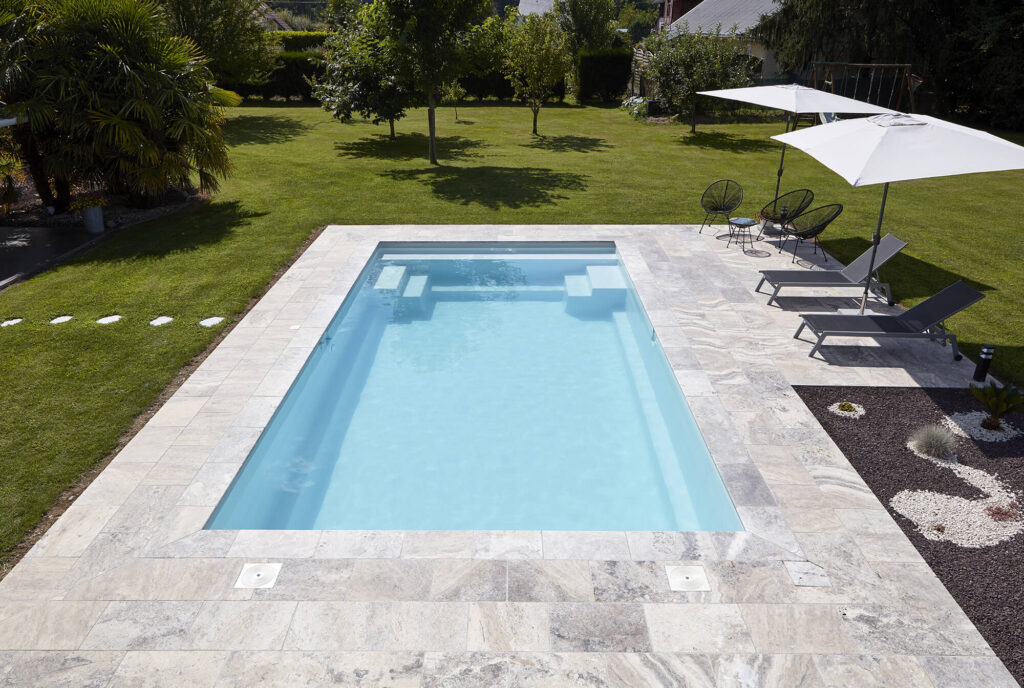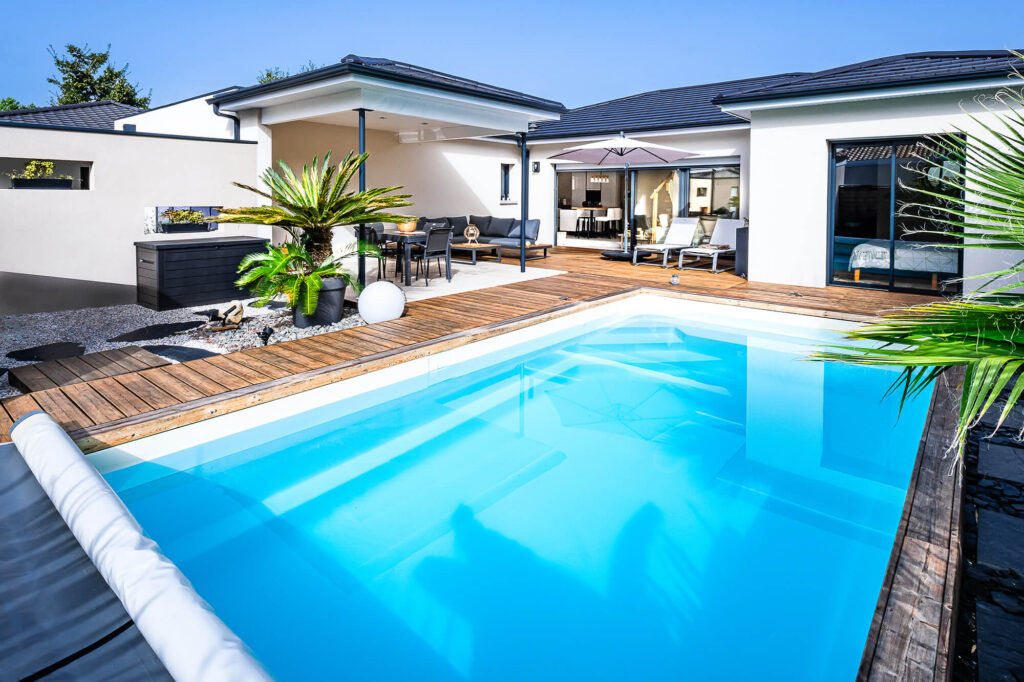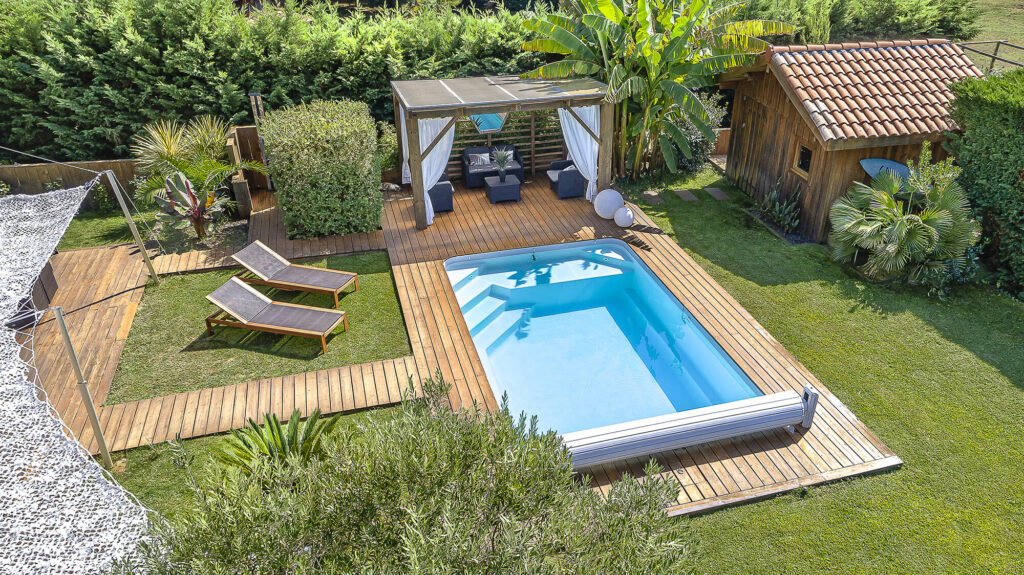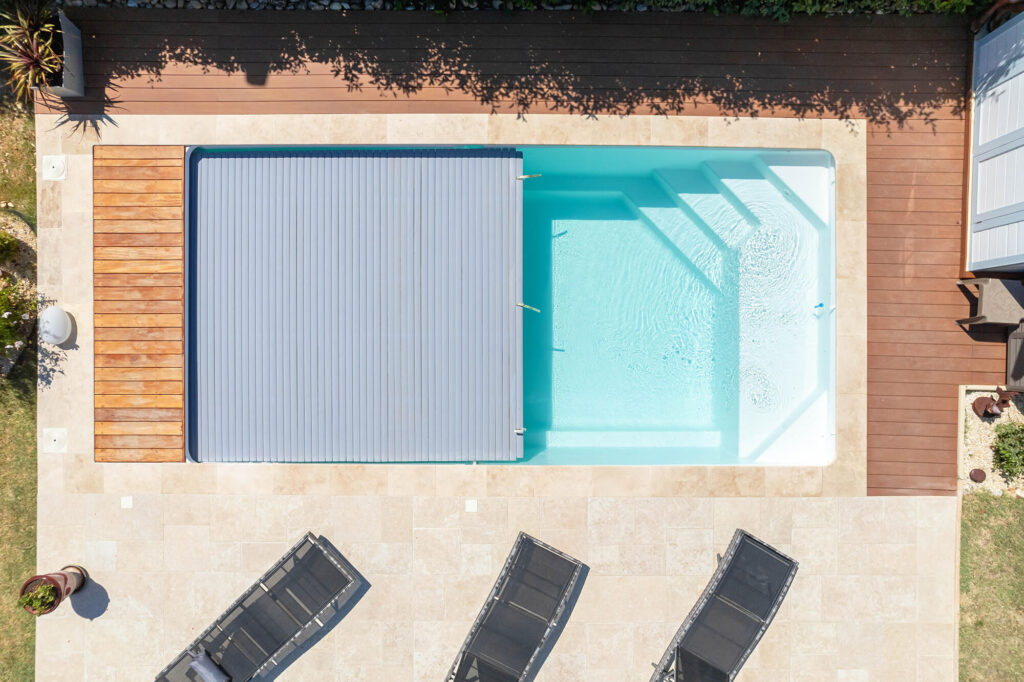
Unlike a concrete pool, the installation of a polyester shell pool is a popular solution thanks to its speed of installation, excellent value for money and durability. durability. However, despite its many advantages, a problem can sometimes arise after installation: the pool starts to move, lift or sink. This can have serious consequences, ranging from simple misalignment to structural cracks that threaten the integrity of the pool.
But then, what can be the main causes of amoving pool, and above all, how can this type of problem be prevented?
Find out the answers to all your questions now.
Why does my shell pool move?
As a general rule, ashell poolproperly installed remains stable over the years. However, it sometimes happens that some pools move, lift, or sink, leading to more or less serious damage.
This phenomenon can be caused by several factors, often related to thenature of the soil, environmental conditions, or installation errors.
1. Soil type
The ground on which the pool rests plays a key role in its stability. Some soils are more prone to movement than others, and a poor assessment of the ground prior to installation can be the cause of many problems.
- Claysoils: these soils are known for their high sensitivity to climatic variations. During dry periods, the clay shrinks and creates empty spaces under the pool. Over time, these spaces can cause theshell to sag. Conversely, when it rains heavily, the clay becomes saturated with water and swells, creating lateral and vertical pressures on the pool, which can cause it to move.
- The sandy or backfilled soils Less compact than rocky or limestone soils, these soils can settle under the weight of the pool. If the initial compaction has not been carried out correctly, this can lead to partial or total subsidence of the pool.
2. Non-compliant installation
Ashell poolmust be installed in compliance with precise rules to guarantee its stability. Any installation error can weaken the structure and promote undesirable movements.
- Poor earthworks: earthworks errors can have significant repercussions on thestability of the pool. Indeed, a poorly sized hole or one dug with irregular walls can cause the pool to be poorly supported. An insufficiently leveled bottom can lead to load differences and promoteshell movements.
- Unsuitable backfill: using soil or sand as backfill is a mistake, as these materials tend to settle over time, leading to subsidence. Rolled gravel backfill is recommended because it ensures good drainage and preventspool movement.
- The absence of a concrete slab: some installers prefer to lay the shell directly on the ground without creating aconcrete slab, which can cause problems on unstable ground. A slab helps to distribute loads better and ensures a flat, solid base.
3. Poor management of the decompression well
Thesump pitis an essential, but often overlooked, element. Its role is to drain water present under the pool, particularly in the event of a high water table.
If this device is missing, blocked or poorly maintained, the water accumulated under the shell can generate upward pressure. When a pool is emptied without taking this pressure into account, the force of the groundwater can cause the shell to lifting of the pool shellsometimes causing irreversible damage.
How to prevent a shell pool from moving?
To avoid this problem, a number of precautions need to be taken from the moment the pool is installed and throughout its use.
- Preparing the ground well: before any installation, asoil study is strongly recommended to identify thesoil compositionand the possible presence of a water table. This analysis allows for the adaptation of the pool's installation and the planning of appropriate solutions, such as laying aconcrete slabor adrainage system.
- Install aneffective decompression well: as mentioned previously, the decompression well helps regulate water pressure around the pool. It must be well-designed, installed near the pool, and regularly maintained to evacuate excess groundwater.
- Follow the manufacturer's recommendations: apolyester shellmust be installed in accordance with the manufacturer's recommendations. It is essential to follow all recommended steps, particularly for backfilling and simultaneous filling of the pool and its surroundings.
- Never empty the pool completely without taking precautions: emptying a shell pool without taking precautions is risky, especially if groundwater is present. Before emptying the pool, it is advisable to consult a professional to avoid deformation or or lifting of the shell.
What to do if your shell pool moves?
Once installed, a swimming pool is not meant to move. That is why, if your pool shows signs of movement, it is best to act quickly to limit the damage and prevent the situation from worsening. The first step is to identify the origin of the problem:ground subsidence,groundwater pressureorinstallation defect.
Calling in a professional is often essential to establish a precise diagnosis and determine the best solution to adopt.
Ground subsidence
If the problem comes from aground subsidence, it may be necessary to reinforce the support of the pool by injecting expanding resin under the pool to stabilize the structure. In some cases, additional excavation or the creation of a concrete slab may be considered to prevent further movement.
Presence of a water table
When the problem originates from the water table, installing or clearing arelief wellcan relieve the pressure exerted under the shell. A suitable pump can be installed to evacuate accumulated water and limit the risks of uplift. If the pool has already moved,repositioning the basinmay be necessary, although this intervention is heavy and costly.
Cracked pool shell
Finally, when ahull crackis observed following these movements,repair workmay be necessary. The application of a specific resin and a protective gelcoat helps to restore the watertightness of the polyester pool. However, if the damage is too significant, replacing the hull may be the only viable alternative.
In all cases, it's advisable to act at the first sign of trouble to avoid major complications that could compromise the use of your pool for good. Finally, if your pool has been recently installed, it may be covered by a ten-year warranty. This insurance protects against defects affecting the solidity of the structure. If a structural problem is found, you can invoke this guarantee to have the repairs paid for.
Configure your pool online Back to all news