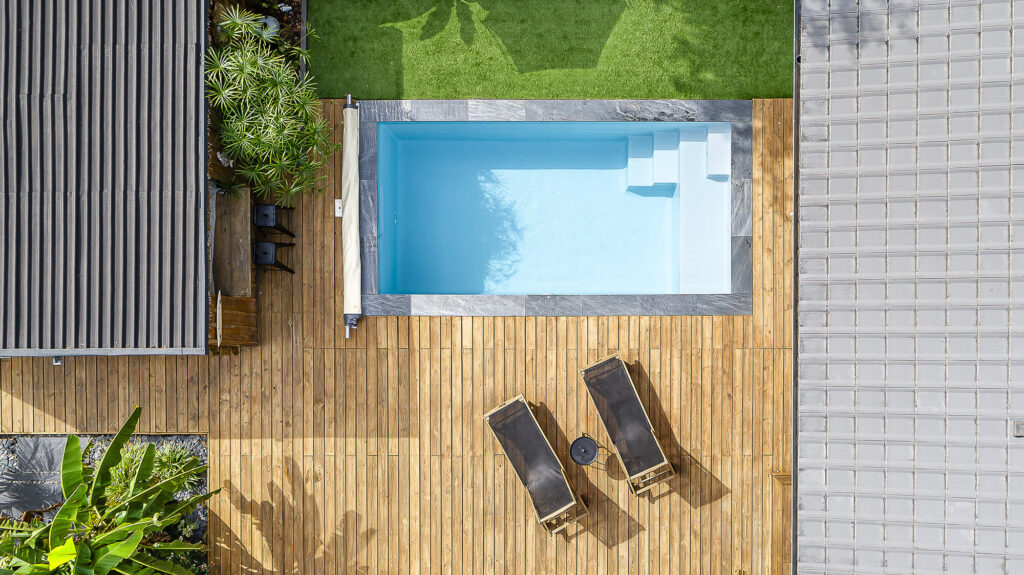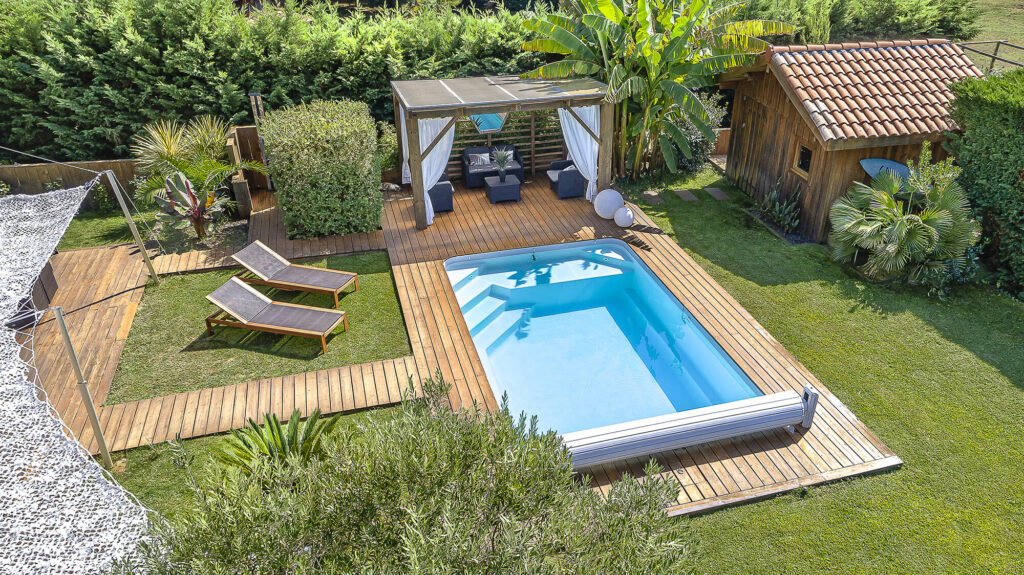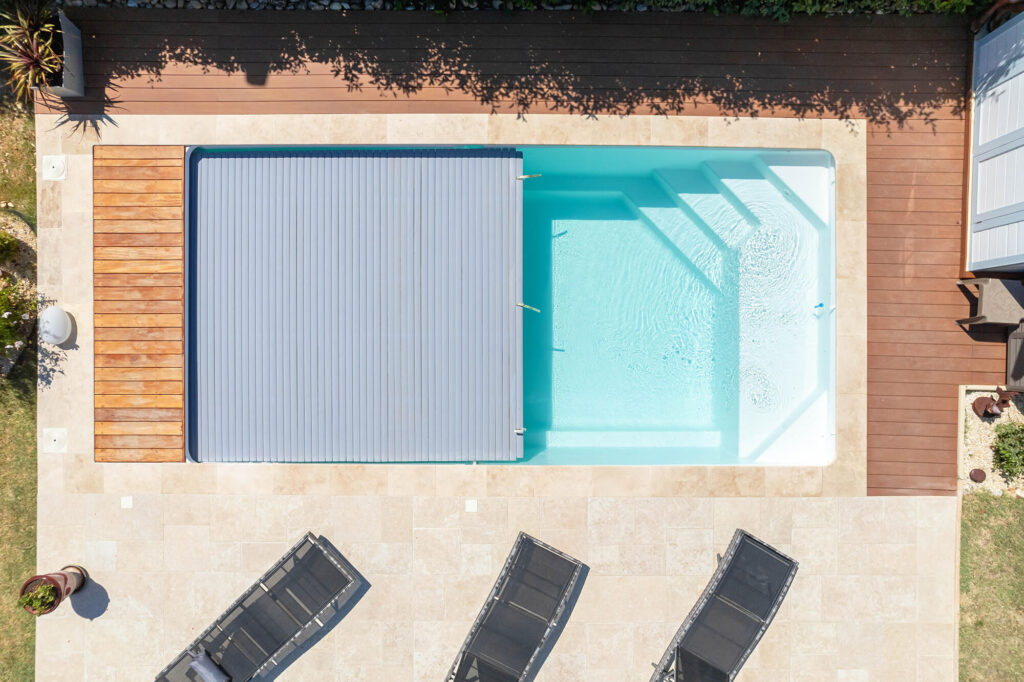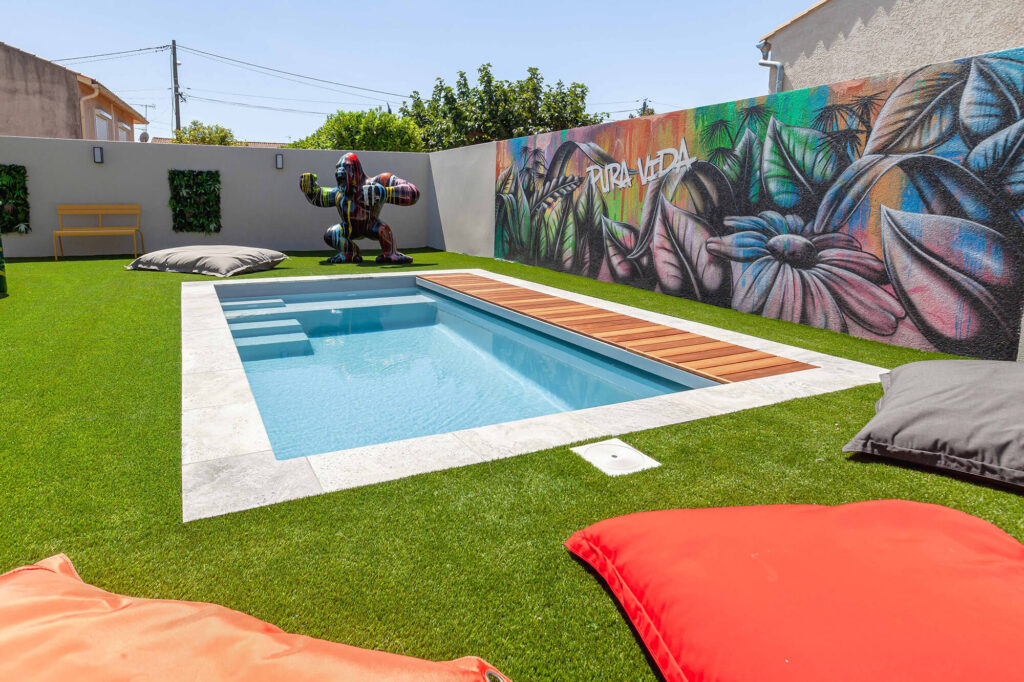
Installing a private swimming poolat home is a dream for many of you. However, this project requires meticulous planning to ensure it perfectly meets your needs and expectations.
Among the most crucial decisions: thechoice of the sizeof youringround pool. And for good reason, this choice impacts not only the aesthetics and functionality of your outdoor space, but also the overall budget required for the project's completion.
So,how to choose the ideal size for your pool? What criteria should guide your decision and what will be the financial consequences of this choice? Let's explore these aspects in more detail to help you make the best possible decision.
The impact of pool size on costs
Thesize of your poolstrongly influences the associated costs, and this on several levels. Indeed, the larger the pool, the higher the construction and maintenance costs will be. Alarge poolrequires more materials, more extensive excavation, and a more complex installation, which translates into higher labor costs.
Furthermore,maintenance costsincrease with the size of the pool. For example, a larger pool will require a more powerful pump and more chemicals to keepthe water clean and balanced.
Also, be aware that a swimming pool is considered an extension of your home; in addition to thedevelopment tax, it is also subject to theproperty tax. This tax can represent a significant long-term cost.
However, certain types ofswimming pools are not taxable(size, above-ground, kit) in accordance with theGeneral Tax Code (CGI). Private pools that are not subject to taxation include:
– Mini-pools (small pool of less than 10 m²);
– Above-ground and removable swimming pools, which do not require earthworks;
– Swimming pools that can be moved without being demolished and without masonry work (kit swimming pools for example).
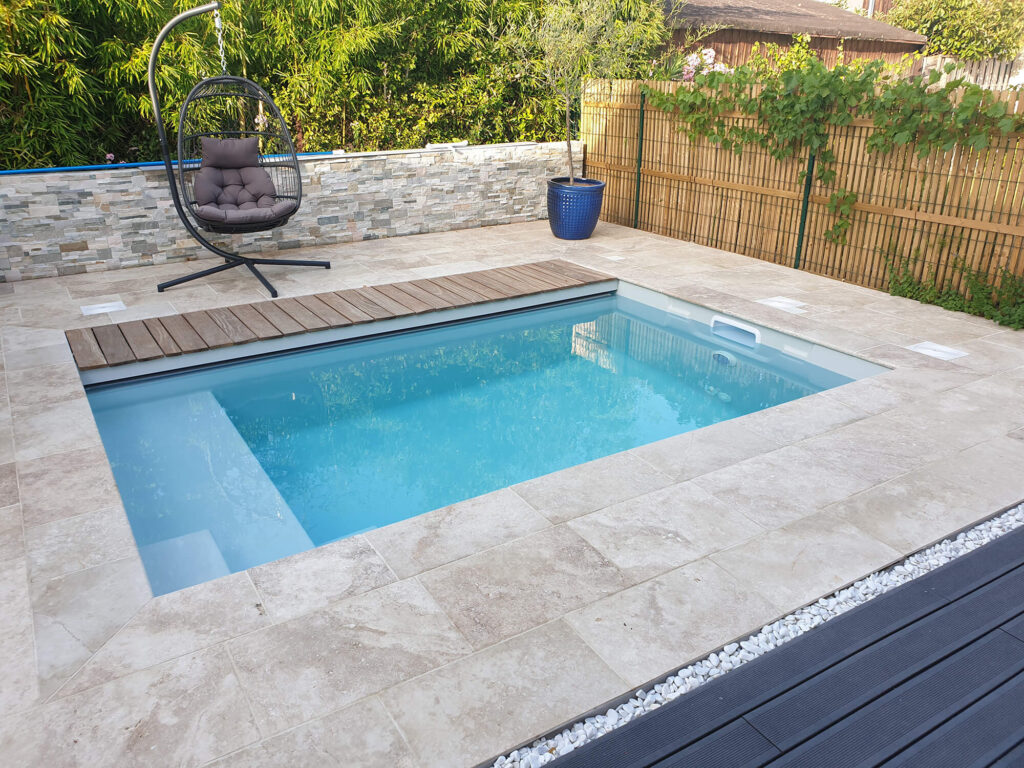
Mini pools are therefore a practical and economical option for many households. They allow you to enjoy the pleasures of swimming while minimizing installation and maintenance costs. The taxation of small pools is also more advantageous.
Costs not to forget in your budget
The dimensions of your pool directly impact not only the construction and installation budget, but also the maintenance costs.
Daily maintenance costs of an in-ground pool
Water consumption
Water represents a significant expense, especially during theinitial filling of the pool.
However, it is not necessary to fill it completely every year, and it is even not recommended to empty it completely to avoid structural damage.
Electricity consumption
Electricity is essential for operating yourpool's filtration system.The daily filtration time depends on the water temperature.
Furthermore, if you decide toheat your poolwith a heat pump or install a counter-current swimming system, this will inevitably increase your electricity bill.
Maintenance products and equipment
Tomaintain your pool, you will need various equipment, such as a skimmer net, a vacuum cleaner (robotic or manual), and test strips or an electronic tester. Although these items do not need to be replaced every year, their initial purchase and occasional replacement represent an expense.
In addition to equipment, the use of maintenance products is essential to maintain clean water. These products include:
– Disinfectant (chlorine, bromine, salt, etc.);
– pH correctors
– Complementary products such as flocculant or algaecide.
These products can be expensive and often represent a significant portion of yourpool budget.
Insurance
Insurance is a cost that should not be forgotten when installing a swimming pool at home. Mandatory guarantees for swimming pool owners include civil liability and damage guarantee.
If your pool was built by professionals, you will also be required to take out building damage insurance, which costs on average €80.
The layout of your exterior
When you have a swimming pool built, certain arrangements are often necessary or desired to take full advantage of your new pool.
This may include laying a waterproof floor around the pool or landscaping work.Depending on the size of your pool, these arrangements may be more or less expensive.
Other costs may apply if you want to install spaces around your pool, such as relaxation areas, an outdoor kitchen or a shower.
Before starting construction, think about defining your budget carefully.Understanding the impact of pool size on costsallows you to make a more strategic choice, suited to your financial means. Consider not only the initial cost but also ongoing expenses for maintenance and usage.
Configure your pool online Back to all news