Managing theenergy consumption of a swimming poolis a key element for any owner. And for good reason, without precautions, costs can quickly increase.
In the vast majority of cases, the bulk of these expenses comes from the operation of the equipment, notably thefiltration pumpand theheating system. These devices, although essential for pool maintenance, can have a significant impact on the electricity bill.
Without further ado, let's find out more about these costs and effective ways to reduce them, whether through more efficient use or by choosing more economical installations.
Factors influencing the consumption of a swimming pool
Theelectricity consumptionis the main expense, particularly for powering essential equipment like thefilter pumpand theheating system. Here's what you need to consider to best assess these expenses.
The filtration system
Thefiltration systemis essential for the proper functioning of a swimming pool. Indeed, it is thanks to thepump and filtration devicethat impurities are eliminated and the water remains healthy for swimming.
However, thepool pump's consumption, which runs daily to maintain water cleanliness, is a point to monitor. And for good reason, its consumption varies according to the power consumed and the duration of its use.
Although modern swimming pools are often equipped with effective more effective, we invite you to precisely determine the filtration time necessary to maintain optimal water quality while reducing energy consumption.
The heating system
Heating your pool wateris often essential to extend the swimming season or maintain a pleasant temperature. Thepool heat pump's consumptiondepends on several variables, such as the size of your pool, the outside temperature, and the temperature you wish to reach.
In colder regions, energy costs can be significantly higher to maintain a water temperature comfortable, while in warmer areas, the impact on consumption will be less significant.
Other equipment
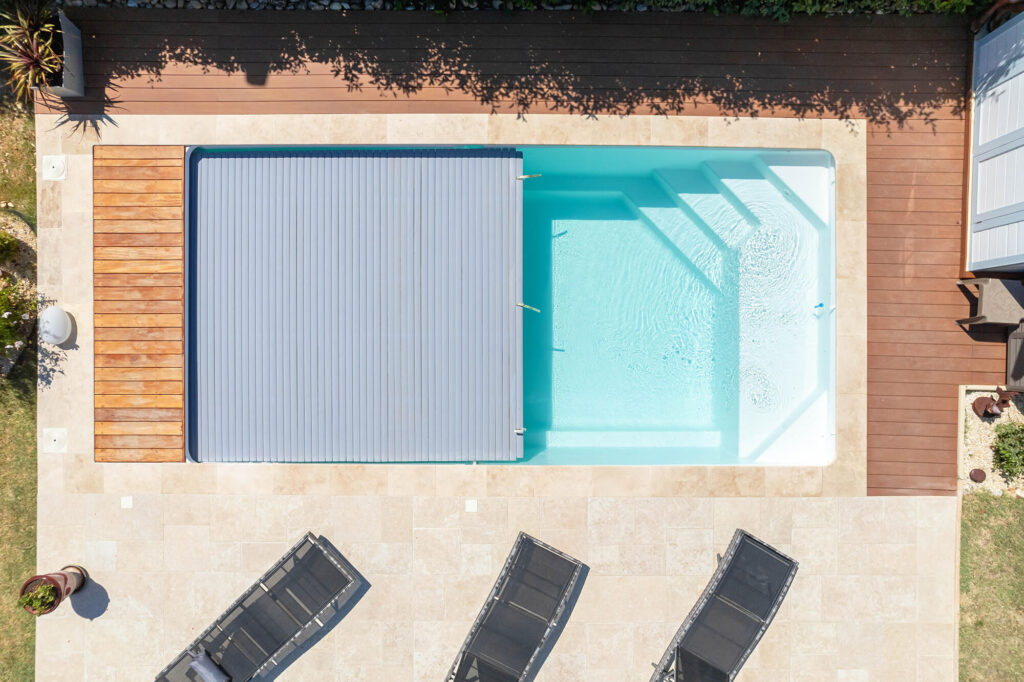
In addition to heating and filtration, other equipment contributes to the overall consumption of a swimming pool. Safety devices, such as automatic covers or alarms, are essential for safety, thermal conservation and water cleanliness. However, they also entail additional energy and financial costs.
Automated cleaning robots and cleaning products are also worth considering. While they add to electricity consumption, their use can help reduce maintenance costs in the long run.
How to calculate the energy consumption of your swimming pool?
Theelectricity consumption of a swimming poolcan vary depending on several factors, but on average, it generally ranges between €300 and €800 per year for heating and water filtration.
To precisely determine thekWh consumption of your pool, it is essential to know the power in kilowatts (kW) of each piece of equipment and multiply this value by the number of hours of use (or the number of days). For example, if yourpool pumphas a power of 1 kW and runs for 8 hours a day, it will consume 8 kWh daily.
The total consumption will also depend on the size of the pool: the larger it is, the more energy will be needed to heat, filter, and treat the volume of water. Furthermore, climatic conditions play a major role. In a warm region, the need for heating will be less, while a colder climate will lead to an increase in consumption.
Understanding your pool'senergy consumptionis essential for saving money. It is therefore important tocalculate the consumptionof each piece of equipment to optimize your spending.
Additional costs to be expected
When consideringthe installation of a swimming pool, it is important to take into account several additional expenses that can quickly add up. Depending on your situation and thetype of poolyou choose, costs related to excavation, drainage, transport, and the use of concrete for the structure may be added. The construction of thetechnical roomalso represents a significant investment, especially if you opt for alarge swimming poolrequiring sophisticated equipment.
Another often underestimated aspect is thecost of electrical connection. This expense can vary depending on the distance between the pool and your home's main electrical panel. To avoid unforeseen costs, it is strongly advised to request a detailed quote and to use qualified and recognized professionals. This not only guarantees meticulous work but also valuable advice for optimizing your expenses.
How to reduce your swimming pool’s consumption?
Reducing your pool’selectricity consumptionis entirely possible, provided you adopt a few simple but effective strategies. To begin, choosing avariable-speed pumpallows you to adjust the pump's electricity consumption based on your pool's specific needs; this can significantly reduce your electricity bill.
If your electricity contract includes the "Peak Hours – Off-Peak Hours" option, take advantage of it to filter or heat your pool duringoff-peak hours, when the kWh rate is lower. This tip can generate significant long-term savings. Additionally, don't hesitate to compare electricity providers to find the best offer for your needs.
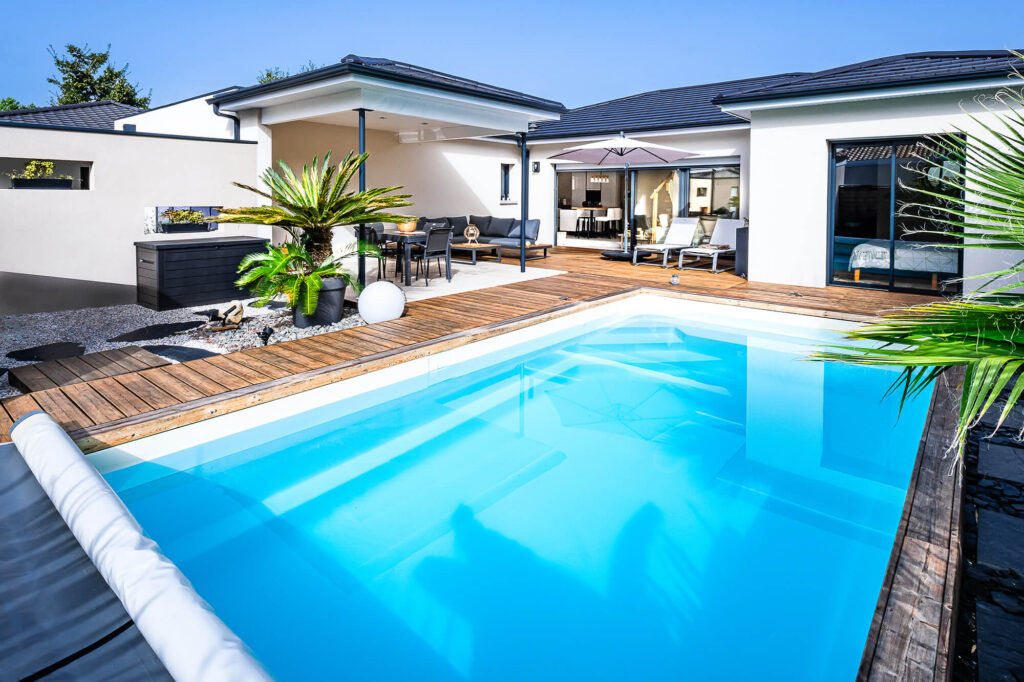
Another method to reduce costs: practice passive winterizing by stopping the pump during winter, when the pool is little used. Adjust daily the filtration time depending on actual needs can also save you money. Finally, to limit the need to heat water, consider using a bubble coverThese devices retain the heat accumulated during the day and conserve it at night, thus reducing thermal losses and energy consumption.
Configure your pool online Back to all news