In-ground pool or shell pool: what's the difference, what choice for your project?
Written by:
Modified on:
Reading time:
Article outline
- In-ground pool or shell pool: what are the fundamental differences?
- How much does a shell pool cost compared to a concrete pool?
- How long does it take to install a concrete pool or a shell pool?
- Maintenance, durability, and waterproofing: which pool lasts best over time?
- In-ground pool or shell pool: how to make the right choice for your project?
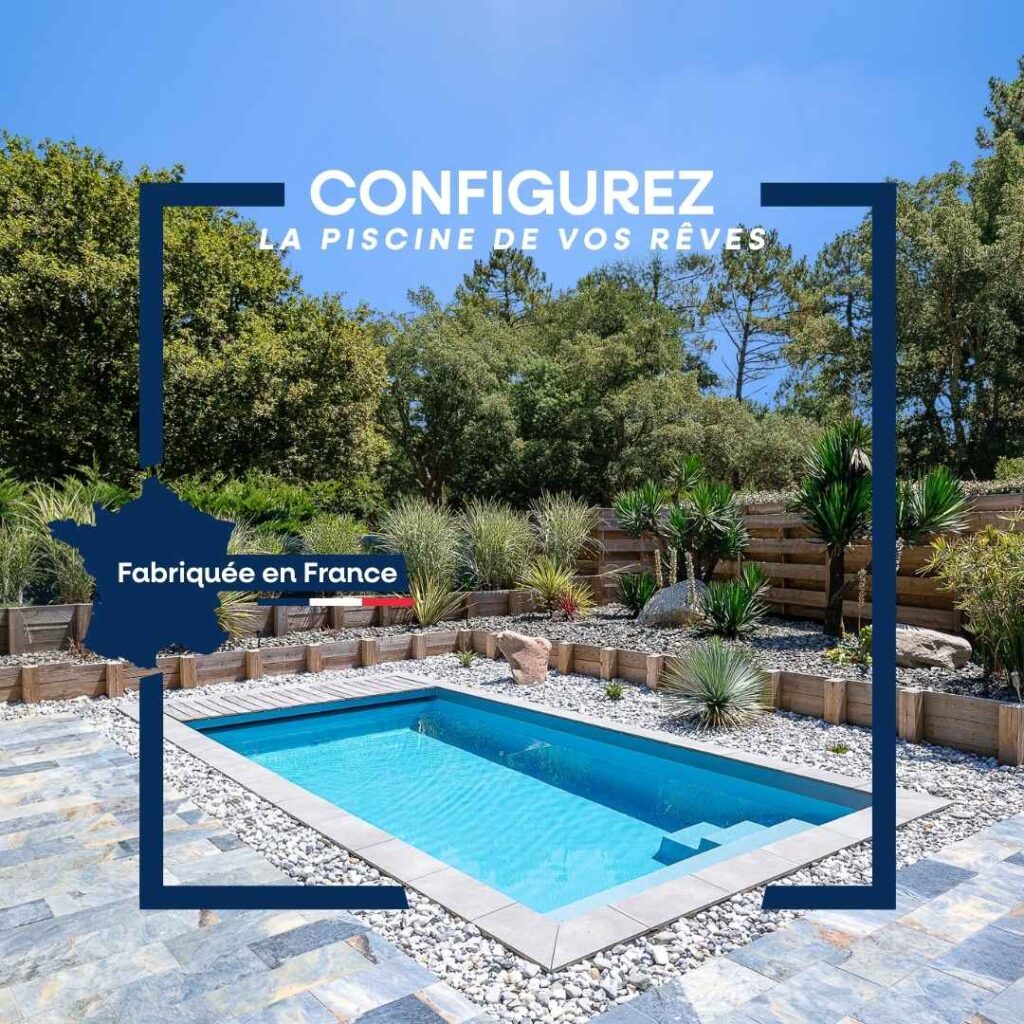
Building a swimming pool is a life project that many homeowners consider for several months before embarking on it. Very quickly, a technical question arises: among the different types of pools available, should you opt for a hard-shell pool, built on-site with reinforced concrete, or a fiberglass shell pool, manufactured in a factory and installed in one piece?
The two solutions coexist on the market, each with its own codes, and it is not always easy to find your way. However, the choice involves a significant investment and several decades of use: it is therefore better to compare the two options on clear bases rather than on preconceived notions.
Discover without further delay the real differences between in-ground pools and shell pools, to help you choose a pool adapted to your land, your budget, and your lifestyle.
In summary:
- The in-ground pool (reinforced concrete) and the polyester shell pool differ in their manufacturing method, budget, and installation time.
- A shell pool is generally delivered and installed in a few days, compared to several months of construction for a masonry pool.
- The choice mainly depends on your budget, your land, and the level of customization you are looking for.

In-ground pool or shell pool: what are the fundamental differences?
What is a permanent swimming pool?
Local in-ground pool, also known as Masonry swimming pool or concrete pool, is built directly on your land by a team of building professionals. The pool is made from concrete blocks, panels, or a steel framework. reinforced concrete, cast in place, then covered with a waterproofing and finishing coating suitable for the project.
This traditional method theoretically allows for all imaginable shapes and dimensions, which appeals to owners with a very specific architectural project or an unusual plot of land.
Nevertheless, it involves a significant labor force and a construction site that takes place in several successive stages: earthworks, structure, waterproofing, then laying of the covering in tiles, plaster or liner.
The final result thus strongly depends on the expertise of the team working on the site, from one professional to another depending on the regions.
What is a polyester shell pool?
Local fiberglass pool is manufactured in a factory, in one piece, before being transported and then installed directly on your land in just a few hours, under the supervision of a technical team.
Its inner wall is covered with a coat, a smooth and waterproof coating that gives it its color to the pool and durably protects it from external aggressions and climatic variations.
Unlike the in-ground pool, the structure is entirely controlled upstream, under stable industrial conditions, which considerably limits on-site risks related to weather or unforeseen ground conditions.
Good to know:
At Aboral Piscines, this French manufacturing relies on several layers of resin and fiberglass, specifically designed to withstand ground movement and ensure the pool's stability for several decades of daily use.
How much does a shell pool cost compared to a concrete pool?
The budget often remains the primary criterion for choosing between a in-ground pool and a shell pools, and for good reason: the discrepancies can be significant for comparable dimensions.
For a pond of equivalent size, a concrete pool requires more labor and on-site intervention time, which directly impacts the final invoice provided by the professional.
Local fiberglass pool, produced under controlled industrial conditions, generally allows for better control of the manufacturing costs and installation.
However, the differences vary greatly depending on the region, the nature of the terrain, the accessibility of the site, and the desired level of finish: only a personalized quote allows you to obtain a reliable estimate of your pool budget. From tailored financing solutions also allow this investment to be spread over several years.
How long does it take to install a concrete pool or a shell pool?
The construction period is often underestimated at the time of choose a pool, as it directly conditions the first swimming season in the garden.
Local in-ground pool requires several successive steps, earthworks, concrete structure, drying time, waterproofing, then laying of the coating, which generally extend over several months, including weather hazards.
Local fiberglass pool, already manufactured in a factory before the start of the construction site, considerably reduces this waiting time for the owner.
Once the earthworks have been completed by the technical team, the shell is installed in a single day, then connected and filled with water in just a few days, with no drying time to observe.
For a homeowner who wishes to enjoy their pool as early as the following season, this time gap often constitutes a decisive criterion in the choice between to install a pool hard or a shell pools.
Maintenance, durability, and waterproofing: which pool lasts best over time?
Over time, the maintenance and resistance of the pool weigh just as much as the initial purchase price in a homeowner's overall budget.
Local in-ground pool can, over time, present micro-cracks related to ground movements, particularly on clay or unstable soils, which sometimes requires costly and restrictive waterproofing repairs.
Local fiberglass pool, thanks to its one-piece structure and its gel coat coating, offers a non-porous surface that naturally limits limescale buildup and reduces the need for chemical cleaning products over the seasons.
At Aboral Piscines, each shell benefits from a structural warranty, a guarantee of peace of mind for owners who wish to enjoy their pool for many years without unpleasant surprises, without having to constantly monitor the condition of the walls.
In-ground pool or shell pool: how to make the right choice for your project?
Beyond the technical characteristics, choose a pool depends mainly on your personal project, your land, and your priorities as a single-family homeowner.
A desire to control one's budget from the initial quote and to quickly benefit from the pool often leads to fiberglass pool, whose short construction time and predictable price appeal to many owners.
A very specific architectural project, with atypical shapes or a steep slope, may justify a in-ground pool, at the cost of a longer construction site.
On the Administrative and fiscal plan, the rules remain broadly identical for both types of pool as long as they are in-ground or semi in-ground, with an impact on the property tax once the work is completed.
Building a swimming pool is above all about choosing a solution adapted to your land, your budget, and your lifestyle. If the in-ground pool seduced by its freedom of forms and its entirely bespoke character, the fiberglass pool convinced by its speed of installation, its proven durability, and its everyday ease of maintenance.
Between these two options, there is no universally valid answer for all projects, only the project that truly suits you, your family, and your land.
To move forward calmly in this reflection, do not hesitate to contact Aboral Piscines to discuss your land, your budget, and your desires with an advisor dedicated to your personal project. integrated coping stones, the advisors Aboral Piscines accompany you directly; for the rest, they direct you to trusted partners.
Share this article

You may be asking yourself these questions?
The in-ground pool is built on-site with reinforced concrete, allowing for custom shapes but extending the construction time. The polyester shell pool is manufactured in a factory and then installed in one piece, with a much shorter installation time.
Once the earthworks are completed, the shell is installed in one day, then connected and filled with water in a few days. Allow generally two to three weeks in total, compared to several months for a traditional pool, including weather contingencies.
For equivalent dimensions, the shell pool generally requires less on-site labor and fewer construction steps, which often reduces the overall project budget. The actual difference, however, depends on the terrain, region, and chosen equipment.
No. As soon as a swimming pool is in-ground or semi-in-ground, the same rules apply: prior declaration or building permit, then impact on property tax and possibly development tax, regardless of the pool material chosen.
Thanks to its gel coat finish, the shell pool offers a non-porous surface that limits limescale deposits and reduces the need for chemicals. Routine maintenance remains comparable to that of a traditional pool, but is generally simpler.
On the same topic
Your fiberglass pool project is waiting for you!
Configure your shell pool in just a few clicks or find your nearest Aboral distributor for personalized support from start to finish.