What administrative steps for a swimming pool?
Written by:
Modified on:
Reading time:
Article outline
- In-ground, semi-in-ground, or above-ground swimming pool: what administrative formalities?
- Prior declaration of works for a swimming pool: how to fill out the CERFA form?
- When is a building permit required for a swimming pool?
- Swimming pool in a protected area: the special cases that can block your project
- Declaring your swimming pool to the tax authorities: the 90 days not to miss
- Mandatory safety standards: devices to consider from the design stage
- Aboral Piscines: complete support from declaration to filling
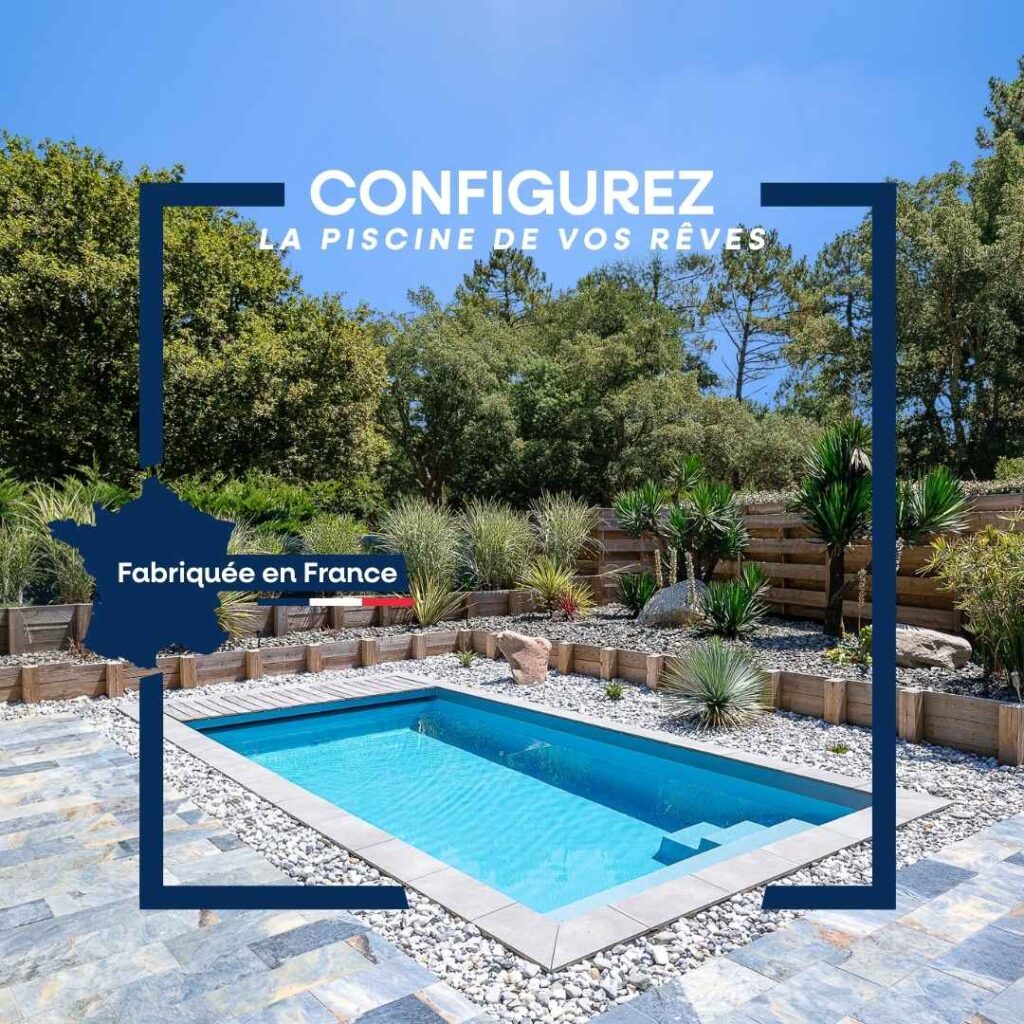
You have your land, your budget, perhaps even the design in mind. And then, someone asks you: "Have you thought about the PLU? The prior declaration? The development tax?" In a few seconds, a project of pleasure takes on the appearance of an obstacle course.
It must be said that between planning permission to be submitted before the start of the works, the tax declaration to be made within 90 days of the works, and the mandatory safety standards, the steps quickly add up… especially when you discover them as you go along.
This article guides you step by step through all the administrative procedures to consider so that you can approach your swimming pool construction project with clarity and peace of mind.
In summary:
- The type of swimming pool (in-ground, above-ground, surface) determines all your administrative obligations: prior declaration, building permit, or no formalities.
- An in-ground swimming pool of 10 to 100 m² systematically requires a prior declaration of works with your town hall, to be submitted before the start of the construction site.
- Once the work is completed, you have 90 days to declare your swimming pool to the tax authorities, under penalty of losing any property tax exemption.
- Any inground pool for private use must be equipped with at least one approved safety device to prevent the risk of drowning.

In-ground, semi-in-ground, or above-ground swimming pool: what administrative formalities?
When it comes to regulations, it is the type of pool that determines everything. An inflatable above-ground pool set up for a few weeks in the summer has nothing to do, administratively speaking, with an in-ground pool installed in your garden.
The distinction between fixed or mobile, temporary or permanent, and the surface area of the basin are the three criteria that determine your actual obligations.
Here is a summary to help you see more clearly:
| Pool type | Surface | Installation duration | Prior declaration | Building permits | Imposition |
| Temporary above-ground | < 10 m² | < 3 months/year | No | No | No |
| Temporary above-ground | 10 – 100 m² | < 3 months/year | No | No | Yes (if permanent) |
| Buried / Semi-buried | 10 – 100 m² | Perm | Yes | No | Yes |
| Buried or with shelter > 1.80 m | 100 m² | Perm | No | Yes | Yes |
Thus, a 8x4 m polyester shell swimming pool (32 m²), permanently buried in your garden, is subject to prior declaration of work. This is the case for the vast majority of In-ground pool projects for individuals. An above-ground pool installed for less than three months a year is exempt from planning formalities, but may still be subject to taxation depending on its actual duration of use.
Prior declaration of works for a swimming pool: how to fill out the CERFA form?
For the majority of projects involving inground swimming pools between 10 and 100 m², the formality to be completed with your town hall is the prior declaration of works. This is a less burdensome procedure than a building permit, but it remains mandatory and must be filed before work begins.
Which CERFA form for a swimming pool prior declaration?
The prior declaration of works for a swimming pool is made via CERFA form no. 13703*06, available free of charge on the service-public.fr website or directly from your town hall. This document allows the municipal administration to verify that your swimming pool construction project complies with the rules of the current Local Urban Plan (PLU) in your municipality: minimum distances from dividing property lines, external appearance rules, and buildable areas allowed on your plot.
Before filling out the form, it is advisable to consult your municipality's PLU (directly at the town hall or on the urban planning geoportals) in order to identify any specific constraints on your land in advance.
What documents should be attached to the prior declaration file for a swimming pool?
A complete prior declaration file for a swimming pool generally includes the following documents:
- A site plan of the land in the municipality,
- A dimensioned site plan indicating the precise location of the pool in relation to property lines and existing structures,
- Photographs of the immediate and distant environment allowing an appreciation of the project's landscape integration,
- A descriptive notice if the architectural or regulatory context requires it.
Some town halls may request additional documents, particularly when the land is located in an area subject to specific architectural rules.
An incomplete file leads to a request for missing documents, which automatically suspends the processing period and consequently postpones the start of the work.
What is the processing time for a prior declaration of works?
The legal processing period is one month from the submission of the complete file. This period is extended to two months if your land is located within the perimeter of a historic monument or in a heritage protection zone.
The silence of the town hall after this period constitutes tacit agreement. In practice, it is strongly recommended to request a non-opposition certificate to legally secure your project.
At Aboral Piscines, the creation and monitoring of this file are part of the support offered to each client from the project study phase.
When is a building permit required for a swimming pool?
If the prior declaration of works covers the vast majority of private swimming pool projects, certain situations require going further. A building permit is then mandatory, with a more complete file to be compiled and processing times that can reach three months.
What are the thresholds that trigger the obligation for a building permit?
Three situations make a building permit mandatory for a swimming pool:
- The surface: any in-ground swimming pool exceeding 100 m² on the ground requires a building permit, without exception.
- Pool enclosures: if the height of the enclosure exceeds 1.80 m, a permit is required even for a standard-sized pool. This is a point that many owners overlook when choosing their equipment.
- The location of the land: if your property is located within the perimeter of a historic monument, a classified or registered site, or a protected natural area, a building permit may be required regardless of the size of the pool. In these cases, the heritage or environmental sensitivity of the area takes precedence over size criteria.
CERFA form and processing times for a swimming pool building permit
The permit application is made via CERFA form no. 13406*06. The file is more complete than a simple prior declaration: it includes, in particular, an architectural notice, graphic documents for landscape integration, and, depending on the case, an opinion from the Architect of French Buildings.
The statutory processing period is a minimum of two months, which can extend to three months in protected areas.
Swimming pool in a protected area: the special cases that can block your project
In France, many territories are subject to specific urban planning rules that apply even to seemingly minor projects. Before submitting any application, it is therefore essential to check the regulatory status of your land.
All land located within a 500-meter radius of a historic monument is automatically subject to the opinion of the Architect of French Buildings (ABF). This opinion is consultative or binding depending on the zones, and can extend processing times by several weeks.
The listed and registered sites are instructed by the DREAL and may in certain cases be refused.
Finally, risk zones (flooding, landslides) require consultation of the Risk Prevention Plan (PPR) before any submission.
For all these situations, the advice of an experienced pool professional is invaluable: it allows for anticipating constraints and adapting the project even before submitting the file, thus avoiding costly back-and-forth in terms of time and money.
Declaring your swimming pool to the tax authorities: the 90 days not to miss
Once the work is completed, the administrative formalities do not stop there. A major tax obligation applies to any owner who has had an in-ground swimming pool built: declaring it to the tax authorities within 90 days of the completion of the work. This deadline is mandatory: failure to comply results in financial penalties and, in some cases, the permanent loss of an exemption from property tax.
How to declare your swimming pool to the tax authorities?
The swimming pool declaration to the tax authorities is made via form 6704-IL (IL model), available from your public finance center, or directly online from your personal space on impots.gouv.fr, under the "Real estate" section.
This declaration allows the administration to re-evaluate the cadastral rental value of your property, which is the basis for calculating your annual property tax.
What concrete tax impact for an in-ground swimming pool?
The installation of an in-ground swimming pool generates two distinct types of taxation:
- The development tax is a one-time tax, payable once at the time of construction. For a prefabricated 8x4 swimming pool (32 m²), its amount generally varies between €80 and €650 depending on the current municipal and departmental rates;
- The property tax is annual. In some municipalities, a temporary two-year exemption may be granted, but only if the tax return is filed within 90 days of the completion of the work. After this period, this exemption is permanently lost.
| Declaration | Form / Channel | Deadline | Risk in case of forgetting |
| Declaration of work | CERFA 13703*06 / Town Hall | Before the start of the construction site | Illegal work, restoration |
| Declaration of Completion (DAACT) | CERFA 13408*05 / Town Hall | Upon completion of the work | Nullity of the authorization |
| Tax declaration | Form 6704-IL / impots.gouv.fr | 90 days after completion | Penalties, loss of exemption |
Mandatory safety standards: devices to consider from the design stage
The regulation is not limited to urban planning and taxation. In France, the law of January 3, 2003, requires that any in-ground private swimming pool be equipped with at least one standardized safety device, in order to prevent the risks of drowning, especially among young children.
This obligation concerns all inground or semi-inground swimming pools, regardless of their size. The absence of a compliant device is punishable by a fine of up to €45,000.
Four types of devices are recognized by the regulations, each meeting a specific AFNOR standard. The choice must be made from the project's design stage, as some (like the submerged deck cover) are integrated directly into the pool structure.
| Device | Standard | Benefits | Indicative cost |
| Safety barrier | NF P 90-306 | Very reliable, permanent | 1 500 – 4 000 € |
| Immersion alarm | NF P 90-307 | Discreet, inexpensive | 200 – 600 € |
| Security cover | NF P 90-308 | Double use safety + insulation | 2 000 – 8 000 € |
| Pool shelter | NF P 90-309 | Versatile, all-season protection | 5 000 – 20 000 € |
The automatic shutters offered by Aboral Shop (notably the Deck by Kristal Pool range, compliant with standard NF P 90-308) simultaneously meet the obligation of safety, thermal insulation of the pool, and the overall aesthetics.
This is a solution particularly appreciated by owners who wish to avoid the visual constraint of a barrier while fulfilling their legal obligation.
Aboral Piscines: complete support from declaration to filling
The administrative formalities for a swimming pool are numerous, and their sequence can seem daunting for an owner discovering this type of project. It is precisely for this reason that tailor-made support makes all the difference.
At Aboral Piscines, we guide you every step of the way so you know exactly what to do, in what order, and within what timeframe. From the feasibility study onwards, our advisors check the applicable PLU (local urban plan) with you, identify any constraints related to protected areas, and assist you in the preparation of the application file at the town hall. On the tax side, they will remind you of the deadlines to meet, the taxes to anticipate, and the exemptions you may be eligible for.
For over 30 years, this advisory approach has been at the heart of our way of working.
To approach your project with peace of mind and benefit from personalized support for all these formalities, do not hesitate to contact Aboral Piscines.
Share this article

You may be asking yourself these questions?
No. An in-ground swimming pool of 32 m² requires a prior declaration of works (CERFA 13703*06), not a permit. A permit is only mandatory for areas over 100 m² or in the case of a shelter exceeding 1.80 m in height.
In standard areas, 1 month. Within the perimeter of a historic monument or a classified site, this period is extended to 2 or 3 months depending on the applicable procedure.
No. Work can only begin after obtaining authorization and the regulatory display of the construction site sign on the land for 2 consecutive months.
Within 90 days of the completion of the work, via form 6704-IL or on impots.gouv.fr. This deadline is mandatory to avoid penalties and retain any 2-year exemption.
The law requires at least one approved device from the following: NF P 90-306 barrier, NF P 90-307 alarm, NF P 90-308 cover, or NF P 90-309 enclosure. Failure to comply is punishable by a €45,000 fine.
Not if it is installed for less than 3 months per year. Beyond that, or if it is fixed and permanent, prior declaration may be required depending on its surface area and local planning regulations.
On the same topic
Your fiberglass pool project is waiting for you!
Configure your shell pool in just a few clicks or find your nearest Aboral distributor for personalized support from start to finish.