Condominium swimming pool: what does the regulation say?
Written by:
Modified on:
Reading time:
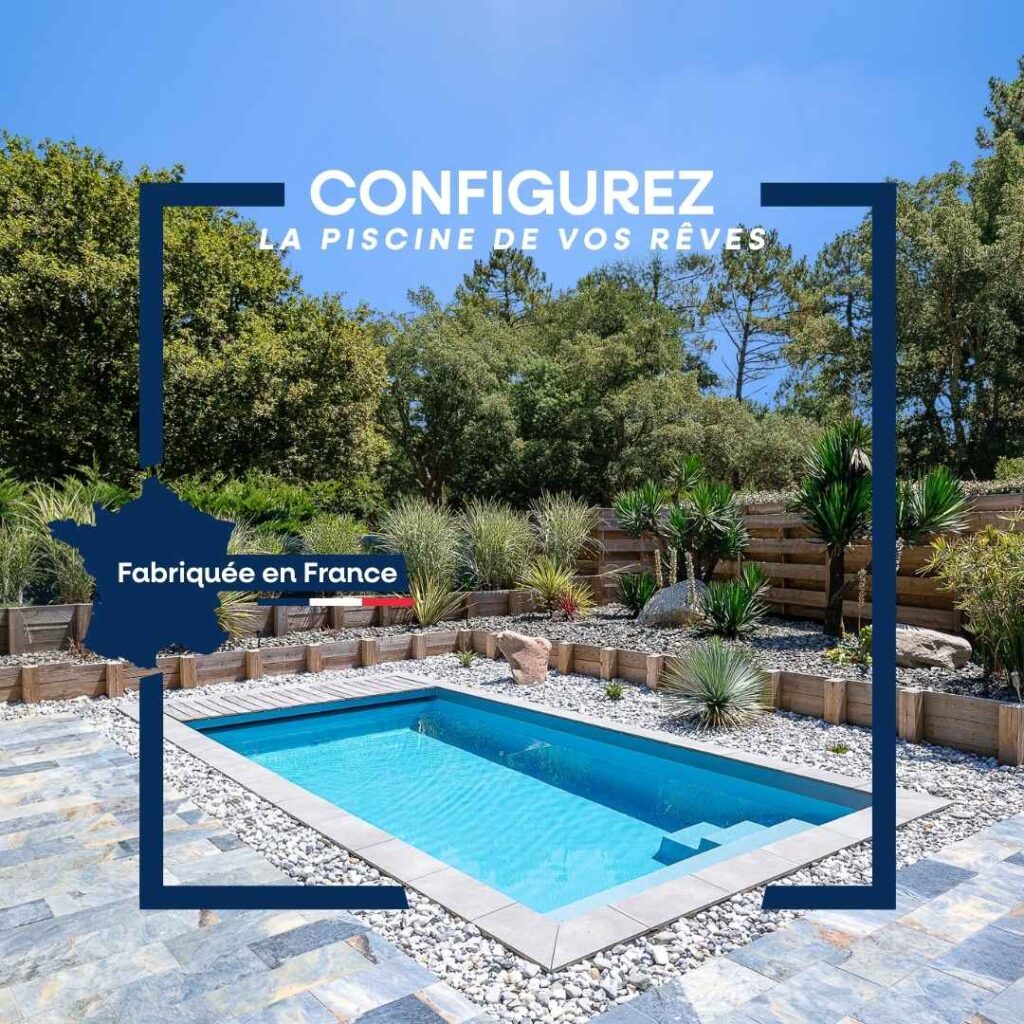
You are the owner of a house within a co-ownership, you have your own garden, and the desire to install a swimming pool there returns every summer. Then comes the question that blocks everything: do I really have the right?
The question is legitimate. A swimming pool represents a significant investment and a lifelong project that spans over time. In co-ownership, it also raises specific questions of regulation, safety, and daily management, which are added to the usual urban planning procedures.
Nothing insurmountable, however. The regulation of a co-owned swimming pool follows a clear logic, as long as you approach it in the right order. This article details the authorizations to obtain, the restrictions that may apply, and how to anticipate daily life around the pool.
In summary:
- The co-owners' association's agreement is necessary, even when the garden is private.
- A planning permit is added to this agreement, its nature depending on the surface area of the basin.
- Municipal rules and the co-ownership regulations may impose restrictions, or even a ban.
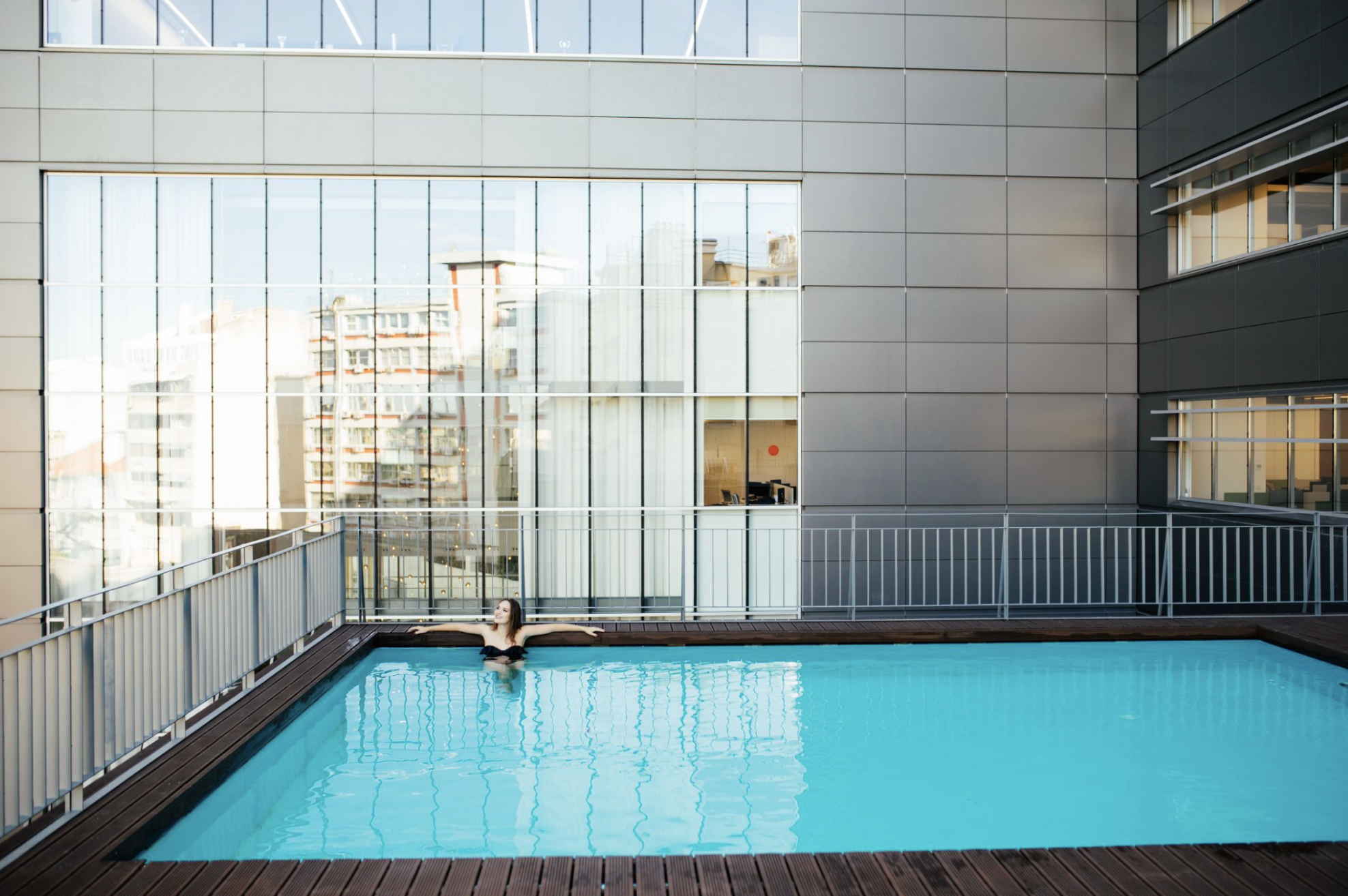
Is the co-ownership's agreement required for a swimming pool in a private garden?
Why does a private pool concern the entire co-ownership?
This is the most often misunderstood point: having a private garden does not mean you can build freely in it.
The installation of a swimming pool, whether in-ground or not, for strictly personal use, nevertheless affects the co-ownership as a whole, particularly in terms of insurance and safety. A pool modifies the immediate environment of other residents, raises questions of liability in case of accidents, and can alter the building's coverage conditions.
The co-owners' association's agreement therefore constitutes a mandatory, distinct, and cumulative prerequisite to the urban planning procedures that you will initiate with your town hall.
A request to be approved at a general meeting
This agreement is formalized during the general meeting of co-owners. In concrete terms, your request must be sent to the managing agent early enough to be included on the agenda of the convocation. The managing agent does not decide alone: they prepare, convene, and execute, but it is the co-owners gathered who authorize or refuse the project.
This step conditions your entire schedule, as an ordinary general meeting is generally held only once a year. Anticipating this meeting avoids postponing the project by an entire season, which frequently happens to projects launched in the spring.
What majority is needed to authorize a swimming pool in a co-ownership?
The authorization given to a co-owner to carry out, at their expense, works affecting common areas or the external appearance falls under Article 25 b of the law of July 10, 1965. It requires the majority of votes of all co-owners, present, represented, or absent, and not just those present on the day of the meeting.
The law provides for a catch-up mechanism. If the project receives at least one-third of the votes at the condominium general meeting without reaching this majority, the same meeting immediately proceeds to a second vote by a simple majority. Otherwise, a new meeting is convened within three months and decides by this reduced majority.
Anticipating this meeting is therefore as important as preparing the file: presenting the project to the co-owners beforehand and addressing their objections significantly increases the chances of obtaining the thresholdfrom the first vote.
A polyester shell swimming pool is manufactured, inspected, and finished in a factory, protected from the weather, then delivered ready to be installed on your land.
On-site, only the earthworks, leveling, wall backfilling, hydraulic networks, and commissioning remain. None of these steps require summer conditions to be carried out correctly.
This is precisely what makes installing a swimming pool in winter feasible: the bulk of the work has already been done in the workshop before the construction site even opens. Once the ground is prepared, the shell is installed in a single day, with no drying time to observe.
What urban planning authorization for your project?
Prior declaration or building permit depending on the surface area of the pool
With the co-ownership agreement obtained, there remains urban planning permission, required for all types of swimming pools: in-ground pools, semi-in-ground or above-ground pools installed permanently.
The formality depends on thesize of the basin. The applicable thresholds are:
| Basin surface | Urban planning formality | Indicative processing time |
| Less than 10 m² | No formalities (outside protected sector) | None |
| From 10 to 100 m² | Prior declaration of works (DPT) | 1 month, 2 months in protected sector |
| Over 100 m² | Building permit (BP) | 2 to 3 months |
Consult your municipality's PLU before starting work
Beyond these national thresholds, each municipality applies its own rules through its Local Urban Plan. Some municipalities specifically regulate the installation of swimming pools, for aesthetic, environmental, or safety reasons.
A visit to the town hall, or an online consultation of the PLU, will prevent you from designing a project that is incompatible with local regulations. This check takes little time and is ideally done even before the design of the pond, as it can guide its location, its shape, or its landscape integration. It is also an opportunity to gather specific instructions for your area if it is protected.
What restrictions can limit your condominium swimming pool project?
Municipal urban planning rules
Local restrictions most often concern concrete characteristics of the pool: its size, height, depth, or location on the plot. A minimum distance between the pool and the property line is frequently imposed.
These requirements aim to preserve the aesthetic appeal of the municipality and the safety of its occupants. They generally do not call into question the feasibility of the project, but they do guide its design.
Integrating them from the site study phase, rather than after the application is submitted, avoids back-and-forth with the urban planning department and secures your schedule.
The clauses of the co-ownership regulations
The co-ownership regulations constitute the second source of constraints, and sometimes the strictest. They can govern the installation of a swimming pool, or even prohibit it, for reasons related to noise pollution or the use of common water.
This document must be consulted before any expenditure is incurred. Reading it early saves considerable time: either it confirms the project's feasibility and you will then know the parameters to respect, or it reveals a blocking clause and you will know that the discussion will have to focus on modifying the regulation itself.
Neighborhood and maintenance: how to avoid daily tensions?
The most common sources of friction
A condominium swimming pool can generate neighborhood tensions. The most frequent ones relate to noise associated with swimming and games, to the lack of privacy with neighboring homes given the proximity of dwellings, to the sharing of space when several people are using it, and to poorly defined maintenance responsibilities.
These difficulties almost always arise from a lack of initial framing rather than a fundamental opposition. Addressing them at the design stage, by working on the basin's layout and its landscape integration, defuses the majority of objections.
Set clear usage rules
Defining the applicable rules in advance avoids many misunderstandings: hours of use, acceptable noise level, division of maintenance responsibilities.
These rules can be formalized by amodification of the co-ownership's internal regulations, which will then reflect the new conditions of use. Dialogue in the general meeting remains the best tool: listening to the opinions expressed, responding to concerns, and adjusting the project helps to prevent conflicts rather than arbitrating them afterward.
Organize pond maintenance
Regular maintenance ensures the quality of the water, the hygiene, and the safety of the installation. It includes cleaning, checking the pH and chlorine levels, and verifying the filtration and pumping systems.
The question of cost sharing and designating responsibility arises mainly when several households share the pool. For a strictly private pool, the answer is simple: maintenance and its financing are your responsibility. A fiberglass pool, whose smooth surface limits impurity buildup, significantly reduces the daily maintenance burden.
The regulation of a co-owned swimming pool adds a step to the process, not an obstacle. Obtaining the general assembly's approval, filing the correct urban planning permit, respecting municipal and by-law restrictions, and anticipating usage rules: four milestones, none of which are insurmountable when tackled in order.
Building a swimming pool means, above all, structuring a life project over several months, by coordinating budget, administrative procedures, and technical choices. If you wish to assess the feasibility of yours before your next general meeting, the teams Aboral Piscines are available to discuss it with you.
Share this article

You may be asking yourself these questions?
Yes, provided you obtain the agreement of the co-owners' association in a general meeting. Even if it's private, a pool commits the co-ownership in terms of insurance and safety, which justifies this mandatory step.
Not systematically. A pool of 10 to 100 m² requires a prior declaration of works. A building permit is only necessary for areas over 100 m², or if the pool enclosure exceeds 1.80 meters in height.
No. The trustee prepares, convenes, and executes decisions, but has no decision-making power of their own. Only the co-owners gathered in a general meeting can authorize or refuse your pool project.
Yes. It can frame the installation, or even prohibit it, particularly for reasons of noise pollution or the use of common water. Consult it before any expense: it is the document that conditions the feasibility of your project.
This is a frequent source of tension, just like overlooking. Defining usage hours and an acceptable noise level in advance, then formalizing them in the internal regulations, prevents most conflicts.
There are two distinct taxes: the development tax, paid once, applies to pools over 10 m² requiring planning permission. The property tax, on the other hand, increases permanently, as the pool increases the property's cadastral rental value. You must declare it to the tax authorities within 90 days of the work being completed: this declaration grants a two-year exemption from property tax, unless your municipality decides otherwise.
On the same topic
Your fiberglass pool project is waiting for you!
Configure your shell pool in just a few clicks or find your nearest Aboral distributor for personalized support from start to finish.