Is it mandatory to insure a swimming pool?
Written by:
Modified on:
Reading time:
Article outline
- Is swimming pool insurance legally mandatory in France?
- What does your home insurance actually cover for the swimming pool?
- An accident in your pool: is your home insurance really enough?
- Damage insurance: mandatory insurance before the start of the construction site
- Pool safety and insurance: what are the obligations?
- A well-protected pool project starts with well-supported planning.
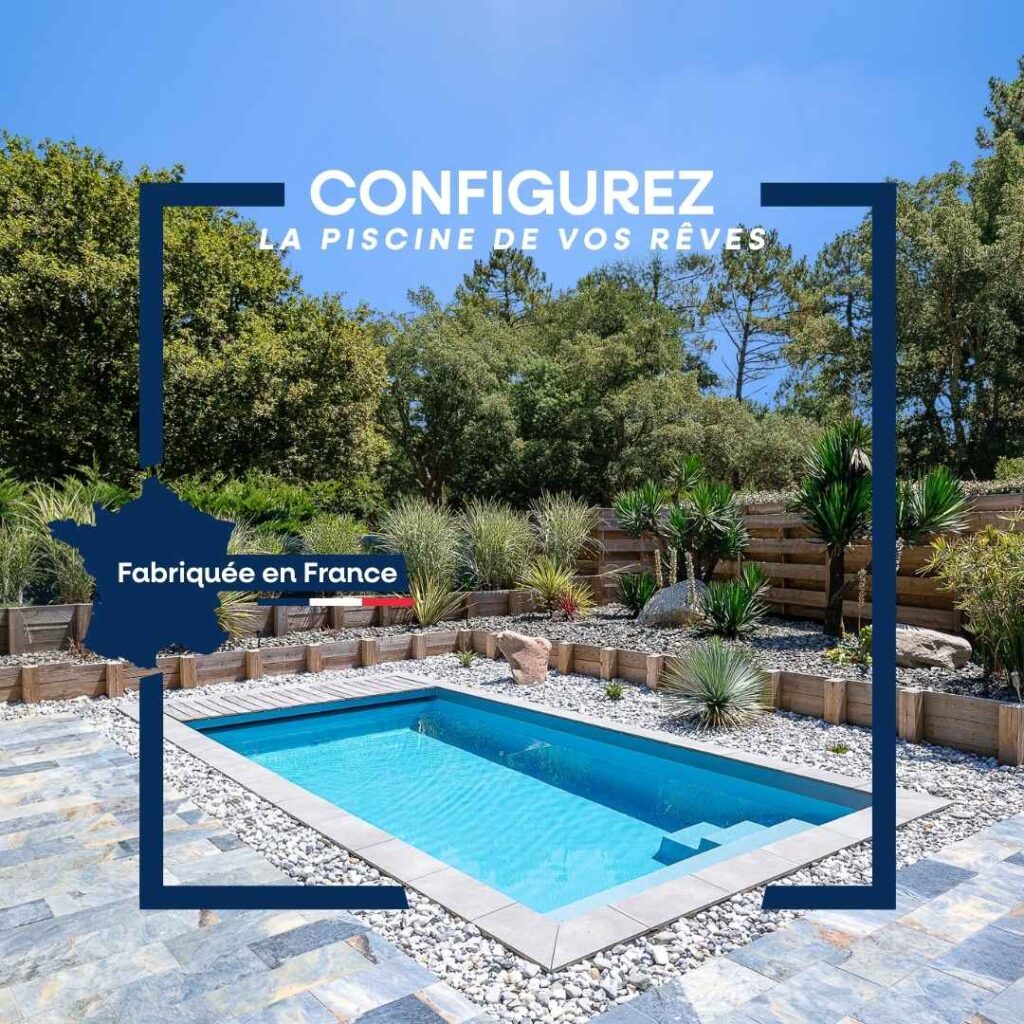
A swimming pool in your garden is a life project. And like any important project, it deserves to be well prepared, including on the insurance aspect, which one might tend to put aside when still comparing models and refining their construction budget.
So, is it mandatory to insure a swimming pool? To date, no law requires you to take out a dedicated "swimming pool insurance" contract. However, some legal obligations naturally apply as soon as you have an in-ground pool built, and knowing them in advance will allow you to approach your project with peace of mind.
Here's everything you need to know before you start to make the right choices, right from the beginning.
In summary:
- Pool insurance is not strictly mandatory, but several legal obligations apply independently.
- The law of January 3, 2003, requires any standardized safety device for any in-ground or semi-in-ground swimming pool; its absence is punishable by a fine of up to €45,000.
- Damage insurance is legally mandatory before the start of the construction site (Article L242-1 of the Insurance Code).
- Informing your insurer when installing a swimming pool is a contractual obligation: forgetting to do so can invalidate certain guarantees in the event of a claim.

Is swimming pool insurance legally mandatory in France?
The legal answer is nuanced. No law explicitly provides for the obligation to take out "pool insurance" as a dedicated contract. In this sense, insuring one's pool via a specific contract is not mandatory. However, this statement must be read with great caution, as it does not mean that the owner is free from all insurance obligations.
Indeed, three distinct obligations are imposed indirectly:
- Firstly, home insurance, which includes civil liability coverage, constitutes an essential safety net once a swimming pool is installed on your property and a third party can access it.
- Secondly, contractor's all-risk insurance is legally mandatory under Article L242-1 of the Insurance Code, as long as the swimming pool is in-ground and considered a construction work.
- Thirdly, law n° 2003-9 of January 3, 2003 imposes standardized safety devices whose absence may, in certain cases, weaken your insurance coverage in the event of a claim.
| Obligation | Reference text | Character |
| Third-party liability insurance (damage to third parties) | Insurance Code, home insurance | Indirect but unavoidable |
| Safety devices (barrier, alarm...) | Law No. 2003-9 of January 3, 2003 | Direct, legal obligation |
| Construction all-risks insurance | Article L242-1 of the Insurance Code | Mandatory before the construction site |
What does your home insurance actually cover for the swimming pool?
The guarantees generally included in home insurance
The first available coverage is the one included in your home multi-risk insurance contract. It generally includes a civil liability guarantee that covers material and bodily damage caused to third parties, in case of an accident during a swim with friends or an overflow that damaged the neighboring property. Furthermore, guarantees related to climatic events (natural disasters, storms, floods) are generally included and can be invoked in case of damage to the pool structure or its surroundings.
However, be aware: this cover only applies if the pool was properly declared to the insurer at the time of installation.
What is generally not covered by home insurance
Home insurance policies typically do not cover, unless specifically opted for, mechanical breakdowns of equipment (pump, filtration, electrolyzer), damage related to frost if winterization has not been carried out, nor theft of equipment (robot, cover…).
For inflatable or demountable above-ground pools, the situation is even more restrictive: considered movable property and not permanent structures, they rarely benefit from the same automatic coverage.
Specific guarantees vary from one insurer to another, so a discussion with your insurer remains essential before having your pool built.
An accident in your pool: is your home insurance really enough?
The third-party liability insurance, included in your home multi-risk insurance policy, covers material and bodily damage that your swimming pool could cause to third parties; whether it is a guest, a neighbor affected by an overflow, or a person who accessed the pool without authorization.
According to a report by the National Assembly on the application of the law of January 3, 2003, the civil or criminal liability of the owner can be called into question in the event of legal action taken after an accident.
The risk is particularly high when young children are involved. The Drowning investigations conducted by Santé publique France indicate that the majority of drownings in private swimming pools concern children under 6 years old (173 cases out of 232 accidents recorded in 2018). It is precisely to address this risk that the law of January 3, 2003, made standardized safety devices mandatory: in their absence, the owner's criminal liability may be added to their civil liability in the event of an accident.
Damage insurance: mandatory insurance before the start of the construction site
It is the great forgotten one in swimming pool projects. However, Article L242-1 of the Insurance Code is unambiguous: any natural person who has construction work carried out must take out damage insurance before the start of the work.
This obligation is part of a broader framework of administrative procedures that it is useful to anticipate well before the first shovel of earth.
The installer's ten-year warranty: what it concretely covers
An inground swimming pool constitutes a structure in its own right within the meaning of the Civil Code: connected to the ground, requiring excavation and foundations, it is subject to the principle of the builder's ten-year liability defined by Articles 1792 et seq. of the Civil Code.
All professionals working on the construction site must therefore be covered by ten-year insurance guaranteeing their activity related to the construction of swimming pools (Article L241-1 of the Insurance Code).
Good to know: polyester shell manufacturers are also subject to this ten-year liability, as the shell is considered an element that can lead to their joint and several liability (EPERS). This guarantee covers for ten years damage affecting the structural integrity of the work or rendering it unfit for its intended purpose (pool collapse, significant cracks in the slab, waterproofing issues making the pool unusable).
Damage insurance: why it changes everything in case of a claim
Contractor's all-risk insurance guarantees, during the ten-year warranty period, the payment of all repair costs for ten-year damage, with no deductible.
In the event of a claim, the owner does not have to take action against the builder themselves: they declare the claim to their insurer, who covers the repairs within a maximum of 90 days, and then proceeds against the builder's ten-year warranty insurer.
Another important point: the benefits of the damage insurance are transferred from owner to owner throughout the ten-year period. In case of sale, the notary can ask to attach the policy to the sales contract, an argument of seriousness and added value not to be overlooked, especially since a swimming pool can increase the value of your home.
Pool safety and insurance: what are the obligations?
Many future owners are unaware of it, but the regulatory compliance of your swimming pool has a direct impact on your insurance coverage. Law no. 2003-9 of January 3, 2003 indeed requires that any private in-ground or semi-in-ground swimming pool be equipped with at least one standardized safety device (Articles L.128-1 to L.128-3 of the Construction and Housing Code). Non-compliance is punishable by a fine of €45,000, and some insurers make their intervention conditional on the compliance of the installation in the event of an accident.
Four devices are recognized by law, each meeting an approved AFNOR standard:
| Device | AFNOR Standard |
| Protective barriers | NF P90-306 |
| Alarms (including immersion alarm system) | NF P90-307 / Decree 2009-873 |
| Safety covers | NF P90-308 |
| Pool shelter | NF P90-309 |
At Aboral Piscines, pools equipped with an integrated shutter (compliant with NF P90-308) simultaneously meet legal safety requirements and the aesthetic expectations of owners.
A well-protected pool project starts with well-supported planning.
Insurance obligations related to a swimming pool are not trivial, and ignoring them can expose the owner to significant financial or legal risks. This is why choosing a French pool builder, with a proper ten-year warranty, is an essential selection criterion. A pool constructor must be able to provide you with an up-to-date ten-year warranty certificate upon delivery, as well as a technical note on the chosen safety device, in accordance with the law of January 3, 2003.
At Aboral Piscines, our support covers the entire project: from the design of the fiberglass shell pool to administrative procedures (compiling the application file for the town hall, building permit), including advice on safety equipment compliant with regulations. All this, so you can focus on what matters most: enjoying your future pool with peace of mind!
As you will have understood, swimming pool insurance is not mandatory as a dedicated contract, but several legal obligations govern the owner's liability from the construction phase. Ignoring them means exposing yourself to financial and legal risks that no one wishes to face, especially after such a significant investment.
If you are considering building a swimming pool, the Aboral Piscines team is available to guide you, step by step, through all stages of your project.
Share this article

You may be asking yourself these questions?
No, there is no "swimming pool insurance contract" imposed by law. However, construction insurance (dommages-ouvrage) is mandatory before the start of the work (art. L242-1 of the Insurance Code), and your home's civil liability insurance is essential in case of damage caused to third parties.
Yes. Failing to declare the installation to your home insurer may constitute an omission under your contract and weaken certain guarantees in the event of a claim. It is a simple step to take when subscribing or renewing.
Any private in-ground or semi-in-ground swimming pool must be equipped with at least one standardized safety device (NF P90-306 barrier, NF P90-307 alarm, NF P90-308 cover, or NF P90-309 enclosure). Non-compliance is punishable by a fine of €45,000 (Art. L. 152-12 CCH).
Yes. An in-ground swimming pool (concrete, polyester shell, masonry) is considered a construction work subject to the ten-year warranty. Damage insurance is therefore mandatory before the start of the construction site, in accordance with Article L242-1 of the Insurance Code.
In addition to the €45,000 fine for the absence of a safety device, the owner's civil and criminal liability may be engaged in the event of an accident. In some cases, insurance coverage may be reduced if non-compliance is established.
On the same topic
Your fiberglass pool project is waiting for you!
Configure your shell pool in just a few clicks or find your nearest Aboral distributor for personalized support from start to finish.