Swimming pools and taxes: what taxes will you have to pay in 2026?
Written by:
Modified on:
Reading time:
Article outline
- What will change (or remain the same) for swimming pools in 2026
- Which swimming pools will be taxable in 2026?
- The development tax in 2026: calculation, amounts, and examples
- Property tax in 2026: calculation, amounts, and examples
- Swimming pools in 2026: what tax exemptions are possible?
- Summary: the total tax cost of a swimming pool installed in 2026
- Declaring your swimming pool to the tax authorities in 2026: the steps to follow
- Aboral Piscines: anticipating tax issues is also part of our job
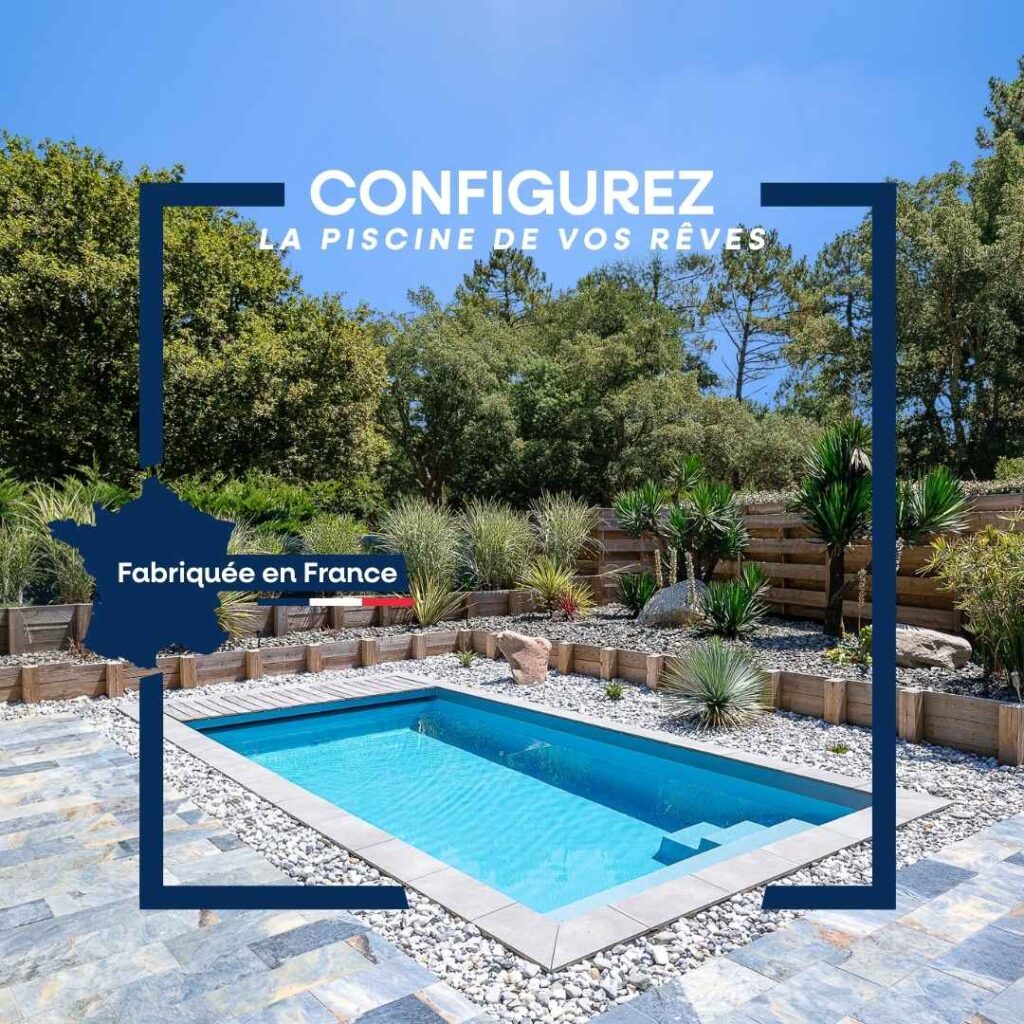
Are you considering building a swimming pool this year and wondering how it will affect your tax return? You're not alone. It's one of the first questions homeowners ask themselves before embarking on a project that often represents an investment of between €15,000 and €35,000.
The good news: in 2026, the taxation related to swimming pools remains perfectly framed, clear, and predictable… provided you know where to look!
This year again, two taxes apply to any in-ground swimming pool: the development tax, levied once upon installation, and the property tax, due each year. What changes from one situation to another is the amount; and on this point, your municipality has more influence than you might think.
This article provides you with the figures applicable this year, concrete examples, and all the steps you need to take to remain compliant.
In summary:
- Two taxes apply: the development tax (one-time, paid only once) and the property tax (annual, due every year).
- The total tax cost varies from €200 to €1,030 in the first year, then €120 to €400 per year depending on your municipality.
- You must declare your swimming pool to the tax authorities within 90 days of the completion of the work, otherwise you will lose your tax exemptions.

What will change (or remain the same) for swimming pools in 2026
Before going into detail about the calculations, it is essential to clarify what is actually changing in 2026 with regard to swimming pool taxation. Many owners still find outdated or incomplete information online, particularly about the housing tax or the development tax.
Here is the updated status of the regulations at the beginning of 2026:
| Tax parameter 2026 | Applicable value |
| National flat-rate value (development tax) | €251/m² – updated by decree each year |
| Maximum municipal rate (development tax) | 5 % |
| Maximum departmental rate (development tax) | 2,5 % |
| Property tax relief | 50% of the cadastral rental value |
| Residential tax (primary residence) | Permanently deleted |
| Mandatory reporting deadline. | 90 days after completion of the work |
The national flat-rate value used as the basis for calculating the development tax for a swimming pool is revised each year by decree, generally on January 1st.
After reaching €262/m² in 2025, it drops to €251/m² in 2026. A notable decrease that mechanically reduces the amount of the development tax for all permits filed in 2026.
2026 therefore appears to be a particularly favorable time to launch your swimming pool project, especially for those who were still hesitant due to tax considerations.
Which swimming pools will be taxable in 2026?
Not all swimming pools are subject to the same taxes, and some are even completely exempt. The determining criterion adopted by the tax authorities is simple: the permanent and fixed nature of the installation.
An in-ground or semi-in-ground swimming pool is considered a built-outbuilding: it sustainably improves the comfort of the property and mechanically increases its real estate value. As such, it is taken into account by the public finances in the calculation of local taxes.
On the other hand, an inflatable or truly removable above-ground pool (without permanent anchoring or earthworks) is not subject to any local taxes. However, please note that an above-ground pool that is permanently installed, connected to fixed equipment, or integrated into a deck may be reclassified as a permanent installation during an inspection.
In 2026, public finances department detection tools (combining satellite imagery and artificial intelligence) are more effective than ever.
| Pool type | Development tax | Property tax |
| Buried/semi-buried (shell, concrete) | Yes, just once | Yes, every year |
| Permanent above-ground (anchored/connected) | Yes | Possible (reclassification) |
| Removable above-ground (inflatable, temporary) | No | No |
| Mini-pool / inground spa < 10 m² | No | No |
Good to know:
Polyester shell pools (such as those offered by Aboral Piscines) are permanent, in-ground installations: they are automatically subject to development tax and property tax.
The development tax in 2026: calculation, amounts, and examples
The development tax is the first tax you encounter when you submit your urban planning permit application. It is a one-time levy, calculated once based on the surface area of your project and according to your municipality.
The formula for calculating the development tax in 2026
The calculation is based on a fixed formula:
Taxable area (m²) × national flat rate × (municipal rate + departmental rate).
The taxable area corresponds to the floor area measured from outer edge to outer edge (i.e., 32 m² for an 8×4 pool). Updated annually, the national flat rate was €251/m² in 2026.
Applied to 32 m², this gives a calculation basis of €8,032. Local rates are then applied to this basis.
Local rates in 2026: the key variable
In 2026, as in previous years, rates will be voted on independently by each municipality (0 to 5%) and each department (0 to 2.5%).
Some municipalities have recently revised their rates upwards to finance equipment or compensate for the decrease in other tax revenues. It is therefore important to check the rates in force specifically in your municipality in 2026, even if you consulted information last year.
Our swimming pool development tax simulator allows you to get an estimate in a few minutes.
Payment terms in 2026
The declaration is made online on impots.gouv.fr ("Real estate assets") within 90 days of the completion of the works.
The payment notice arrives between 12 and 18 months later. Payment is made in a single installment if the amount is less than €1,500, or in two installments six months apart if the amount exceeds €1,500.
Any delay in payment will result in a 10% surcharge.
Property tax in 2026: calculation, amounts, and examples
Unlike the development tax, the property tax is an annual tax, due each year as long as the pool is in place. Its principle is simple: an in-ground pool permanently improves your property, which the administration translates into a revaluation of its cadastral rental value.
The calculation of your property tax is carried out in three steps:
- The administration begins by reassessing the cadastral rental value, taking into account the surface area of the basin and its type of installation.
- She then applies a flat-rate deduction of 50%, which significantly reduces the tax base.
- The result is then multiplied by the rate voted by your municipality: a rate that can range from 20% in rural areas to over 60% in some large urban areas.
In practice, the annual property tax increase attributable to a swimming pool is between €120 and €400 per year depending on your location; a range that is useful to integrate into your budget from the project's conception.
Swimming pools in 2026: what tax exemptions are possible?
1. Temporary property tax exemption (2 years)
Some municipalities have voted for a two-year property tax exemption for new constructions, including swimming pools. It is not automatic: to benefit from it, you must declare your swimming pool to the tax authorities within 90 days of the completion of the work. After this period, the benefit is permanently lost, with no possible recourse.
To find out if your municipality has adopted it, simply call your town hall or the property tax department in your area.
2. Swimming pools exempt by nature
Some swimming pools are completely exempt from taxation:
- mini-pools and inground spas of less than 10 m²,
- Above-ground pools that can be completely dismantled, without anchoring or excavation.
As soon as a project goes beyond this framework (which is the case for the vast majority of shell pools), the tax applies in full.
Summary: the total tax cost of a swimming pool installed in 2026
To allow you to visualize concretely, here is a consolidated estimate of the tax cost for an 8x4 shell pool, according to three representative geographical scenarios:
| Tax scenario | Development tax (year 1) | Property tax/year | 5-year total | Total 10 years |
| Low taxation (rural community) | ≈ 84 € | ≈ $120/year | ≈ 684 € | ≈ 1 284 € |
| Average taxation | ≈ 343 € | ≈ $240/year | ≈ 1 543 € | ≈ 2 743 € |
| High taxation (large city) | ≈ 629 € | ≈ $400/year | ≈ 2 629 € | ≈ 4 629 € |
Even in the highest scenario, the cumulative tax cost over 10 years represents less than €40 per month. Compared to the real estate capital gain provided by a swimming pool (often estimated between 5 and 15% of the property's value) and its daily utility value, the tax impact remains very moderate considering the overall investment.
This is precisely the reasoning that leads many owners to finance their project through borrowing rather than waiting to have the full down payment: when the cost of credit remains lower than the value of use and the capital gain generated, the trade-off often favors immediate launch.
Declaring your swimming pool to the tax authorities in 2026: the steps to follow
Reporting requirements have not changed in 2026, but deadlines remain strict and penalties for non-compliance are very real. Here are the two key steps to anticipate.
1. Before construction: planning permission
Any in-ground or semi-in-ground swimming pool requires planning permission issued by your local council. In most cases, a prior declaration of works is sufficient: this is the standard form for projects under 100 m² in non-classified areas.
A building permit is required for swimming pools exceeding 100 m², projects in protected areas, or when a pool enclosure exceeds 1.80 m in height. The processing time is generally one to three months.
At Aboral Piscines, assistance in preparing the town hall application file is an integral part of customer support.
2. Within 90 days of completion of the work: tax declaration
This is the most important step from a tax perspective. Once your pool is installed and usable, you have 90 days to declare it to the tax authorities via impots.gouv.fr (section "Real estate assets"). This declaration is mandatory and allows the public finances to update the cadastral rental value of your property.
In 2026, this deadline remains an absolute limit: exceeding it means permanently losing the benefit of the temporary property tax exemption, if your municipality has adopted it.
Good to know:
Failure to declare your swimming pool in 2026 will result in a four-year back tax on property tax, plus late payment penalties, the permanent loss of any exemptions, and a fine of up to €6,000/m² for violating the Urban Planning Code.
Please note that satellite cross-referencing and artificial intelligence detection systems are now operational throughout France.
Aboral Piscines: anticipating tax issues is also part of our job
Choosing your pool also means choosing who you build it with. For over 30 years, Aboral Piscines has been supporting homeowners with detailed quotes, advice tailored to each situation, and clear budget projections. Because a project that is well costed from the start is a project approached with peace of mind, without any unpleasant surprises along the way.
This also applies to financing. Even today, many owners are unaware that there are several ways to spread thecost of a swimming pool depending on their profile: classic home improvement loan, 180-month pool loan, partial down payment… Each situation is different, and personalized advice often makes all the difference between a project postponed and a project launched this year.
Building a swimming pool in 2026 is above all a life project; and taxation should not be a barrier. Well anticipated, it remains very reasonable considering the value added to your property.
If you would like a precise estimate according to your municipality, the experts Aboral Piscinescan assist you, without obligation.
Share this article

You may be asking yourself these questions?
In 2026, an in-ground swimming pool will be subject to a development tax (one-time, upon installation) and property tax (annual). The housing tax will be permanently abolished for primary residences.
The national flat rate is updated annually by decree. In 2026, it will be €251/m².
No, for primary residences. The housing tax will be permanently abolished in 2026. For secondary residences, it may still apply in certain cases.
90 days from the completion of the work, on impots.gouv.fr. This deadline is mandatory: exceeding it will result in the permanent loss of any exemptions.
Yes, if your municipality has voted for a temporary two-year exemption for new buildings. You must submit your declaration within 90 days to benefit from this exemption.
Property tax back payments over 4 years with penalties, loss of exemption, and fines of up to €6,000/m². Satellite and AI detection systems are operational throughout France.
On the same topic
Your fiberglass pool project is waiting for you!
Configure your shell pool in just a few clicks or find your nearest Aboral distributor for personalized support from start to finish.