Dogs and swimming pools: What are the dangers?
Written by:
Modified on:
Reading time:
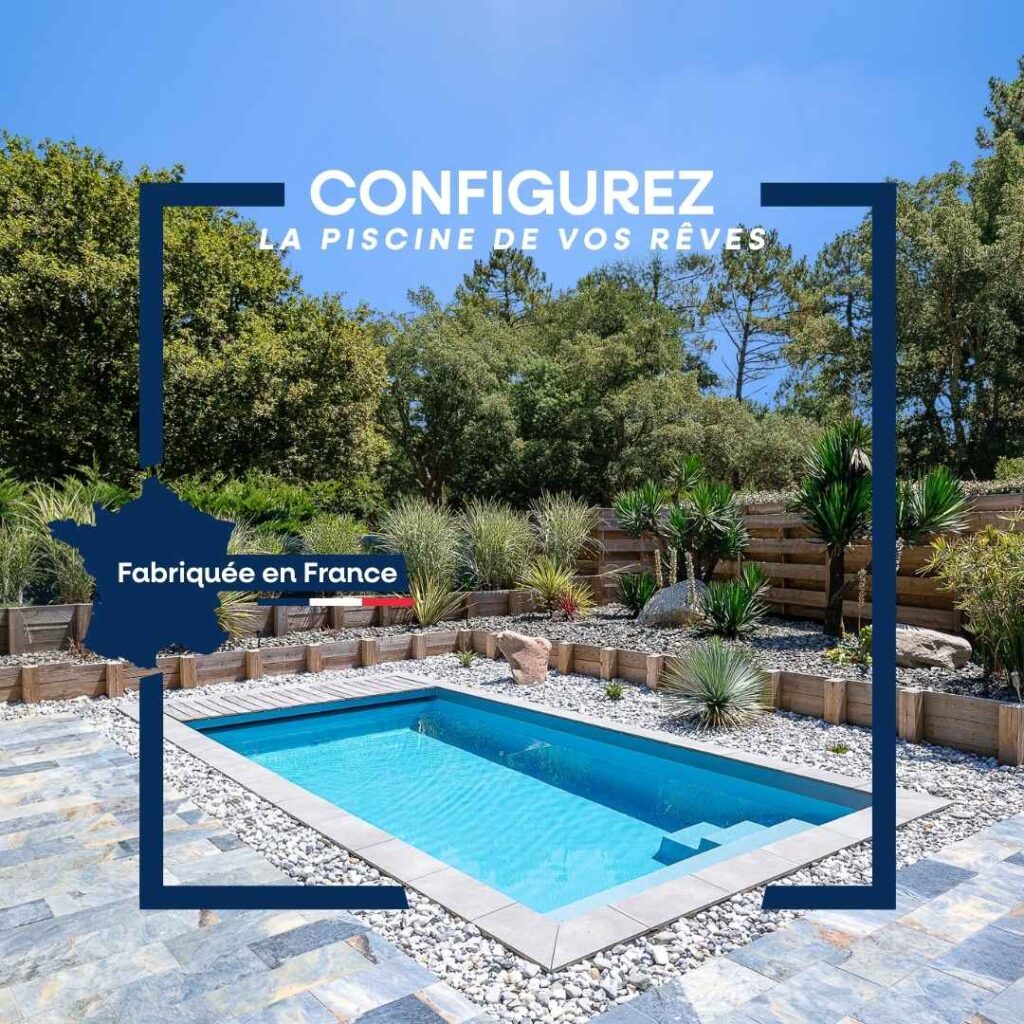
“All dogs know how to swim.” This is probably the most common phrase heard as soon as the subject is brought up, and it's also the one that leads to the most accidents. Yet, it is accurate: almost all dogs do indeed know how to swim. The problem lies elsewhere and is much less known to owners.
A dog falling into a pool instinctively swims along the walls looking for a foothold. If it finds none, it continues to circle until exhaustion. So it's not the swimming that's the problem, but getting out.
This confusion explains why the danger of a swimming pool for a dog remains largely underestimated. It also explains why standardized devices, designed for children under 5, offer no guarantee for an animal.
This article revisits the subject from the ground up: the real risks, what the regulations cover, and especially the design choices that allow you to secure your pet.
In summary:
- The main danger is not swimming but the dog's inability to find the exit: the design of the pool is the primary safety feature.
- Standardized devices are designed for children under 5 years old: some, like the flap or the tarp, can even become traps for an animal.
- Balanced water does not pose a risk for occasional bathing, provided the dog is rinsed after each bath.
Can a dog really drown in a swimming pool?
Yes, and this situation occurs more frequently than most owners imagine. The swimming instinct is present in almost all dogs, but it guarantees nothing beyond the first few minutes.
Four causes recur in most accidents:
- The absence of an exit: high, smooth walls offer no grip for the animal to pull itself up. Lacking an identifiable escape route, it quickly descends into a state of panic that accelerates fatigue.
- Accidental falls: they primarily affect puppies, elderly dogs, and those with declining eyesight: three profiles that fall without anticipating it and then struggle to get back up.
- The morphology of the dog:certain breeds with massive bodies and short legs, like bulldogs and pugs, may have difficulty swimming. The effort required quickly becomes insurmountable.
- Exhaustion: a dog that runs along the edge without finding an exit swallows water with each attempt, gets tired, and eventually can no longer stay afloat.
These four causes have one thing in common: they all assume that the dog cannot find a way out. As soon as an exit point exists and is visible from anywhere in the pool, the scenario stops.
Shutter, tarp, alarm: do these devices really protect your dog?
Equipment designed for children, not for animals
This is perhaps the most misunderstood point by owners. The four regulatory safety devices were designed, tested, and certified to prevent a child under 5 years old from accessing the pool. A dog meets different parameters (weight, four-legged stance, load distribution) that the standards were never intended to cover.
The automatic cover perfectly illustrates this discrepancy. Certified NF P 90-308, it is tested to prevent a child under 5 from accessing the pool and can withstand an adult walking on it. However, the standard never anticipated the case of an animal climbing on it: a dog can step onto the apron, slip into a lateral gap between the slats and the wall, and end up trapped under the cover, unable to get back out.
The flexible winter cover remains, it, the most problematic device: poorly tensioned, it forms a pocket from which the animal does not emerge. As for the submerged alarm, it detects the entry into the water of a medium-sized dog, its weight exceeding the calibrated trigger threshold for a young child. It therefore signals the incident, but never prevents it: it assumes a person will be present and available to intervene within minutes, which is precisely what is missing in most accidents.
Swimming pools and animals: what does the regulation say?
Since the law of January 3, 2003, any inground swimming pool that is not enclosed and intended for private use must be equipped with a standardized safety device, under penalty of a fine of up to €45,000. Four devices are recognized: barrier (NF P90-306), alarm (NF P90-307), cover (NF P90-308), and shelter (NF P90-309).
These standards were calibrated to prevent a child under 5 years of age from accessing the pool. No text requires protection for domestic animals and no standard takes them into account in its tests.
The safety of your dog therefore rests entirely on voluntary choices.
| Device | Standard | Child efficiency | Dog efficiency |
|---|---|---|---|
| Above-ground pool cover | NF P 90-308 | Raised | Low to medium |
| Submerged shutter | NF P 90-308 | Raised | Average |
| Barrier | NF P 90-306 | Raised | Raised |
| Submersible alarm | NF P 90-307 | Average | Weak |
| Shelter | NF P 90-309 | Raised | Raised |
The barrier remains the only truly reliable device for an animal.
Chlorine, salt: what are the health risks for your dog?
On this subject, concern far exceeds the actual risk. Properly balanced water (1 to 2 mg/L of free chlorine for a pH between 7.0 and 7.4) remains well below the toxicity thresholds for a dog during occasional swimming.
The problem stems from two specific situations: repeated ingestion, where an animal gets into the habit of drinking from the pond instead of its bowl, and prolonged contact after a shock treatment. In the latter case, wait 24 to 48 hours before any swimming and systematically leave fresh water available near the pond.
Local saltwater pool treatment title between 3 and 5 g/L, or nearly ten times less than seawater. It is objectively the most comfortable option for a fireplace with animals: less irritating for the eyes and skin, it is generally accompanied by a automatic pH regulation qit guarantees a stability that manual dosing never quite achieves.
The essential remains, and this is valid regardless of the treatment: rinse the dog with clear water after each bath and carefully dry its ears. Breeds with floppy ears easily develop external otitis in late summer, almost always due to lack of drying.
designs with you a pool adapted to your dog
Everything depends on the moment you choose your pool model, and that's good news: the most effective protection costs practically nothing when it's integrated from the start.
A full-width staircase, a sunken shelf or a perimeter bench offer the dog a visible and instinctive exit point, regardless of where it is in the pool. Also, be sure to opt for non-slip but non-abrasive coping stones for the paws and to secure access to the technical room.
This is precisely the logic followed by Aboral Piscines, which designs, manufactures, and installs fiberglass shell pools in France for over 30 years. At Aboral Piscines, we always start with the household's lifestyle before discussing models. For a family with a dog, this translates into three concrete orientations:
- A scratch-resistant gelcoat,
- Flat-bottomed pool models and long beach areas for easy water exit,
- and a salt electrolysis treatment, gentler on the animal's skin and eyes.
The danger of a pool for a dog is not resolved with an accessory bought afterwards, but by decisions made at the right time. If you wish to discuss it, our team is available to study your project.
Share this article

You might be asking yourself these questions?
Yes. Most dogs know how to swim, but very few know how to get out of a pool with vertical walls on their own. The animal swims along the walls looking for a foothold and exhausts itself in a few minutes. A wide staircase eliminates this risk.
No, at normal dosage: balanced water contains 1 to 2 mg/L of free chlorine, well below toxicity thresholds. Simply avoid swimming for 24 to 48 hours after a shock treatment and rinse the dog afterwards.
Yes, generally. A saltwater pool has a concentration of 3 to 5 g/L, which is nearly ten times less than seawater. It is less irritating to the eyes and skin and often benefits from automatic pH regulation.
A PVC liner can be scratched or even torn, especially on the waterline and in the corners. Conversely, the gelcoat of a polyester hull does not tear.
Not reliably. Shutters are certified NF P90-308 to prevent access by a child under 5 years old, never to retain an animal. A dog that steps onto the cover can slip into a side gap and get trapped under the cover.
No, there is no legal obligation. The law of January 3, 2003 only aims at the prevention of child drownings. Among the four standardized devices, the NF P 90-306 barrier remains, however, the only one truly effective against an animal.
On the same topic
Your fiberglass pool project is waiting for you!
Configure your shell pool in just a few clicks or find your nearest Aboral distributor for personalized support from start to finish.