What are the different types of swimming pools?
Written by:
Modified on:
Reading time:
Article outline
- Why is the shape of your pool such an important decision?
- The rectangular pool: the most popular shape in France
- Free-form and organic shapes: when the pool blends into the garden
- Round, Oval, or Square Pools: Benefits, Uses, and Differences
- Our tips for choosing the right shape for your prefabricated pool
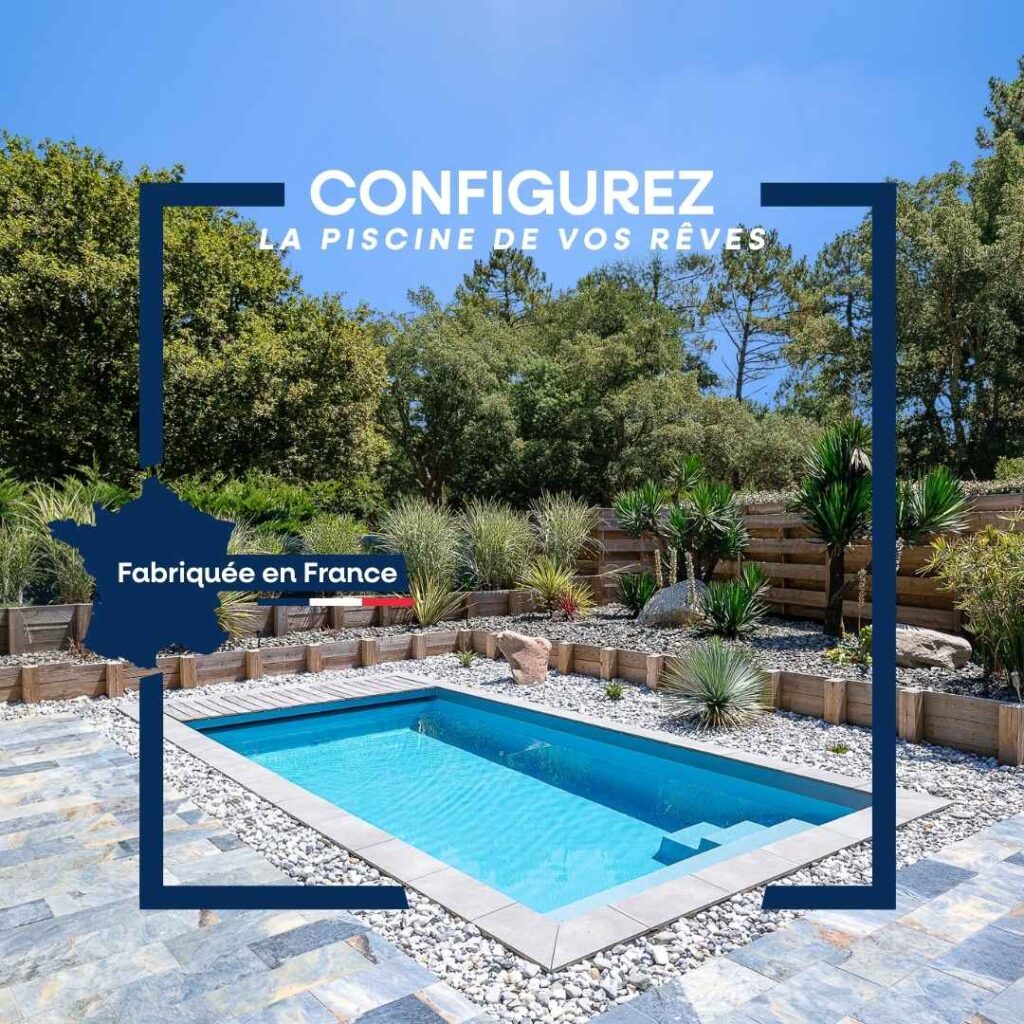
Before even thinking about the dimensions or the color of the water, the shape of the pool is one of the first decisions you’ll have to make.
Rectangular, open-plan, round, oval, or fully customized: each shape serves different purposes, fits into a garden in a different way, and involves technical, aesthetic, and budgetary constraints that must be anticipated from the outset.
Discover the main types of fiberglass pools available on the market, along with their advantages and limitations, so you can move forward with your project with confidence.
In summary:
- Polyester shell pools are available in rectangular, free-form, round, oval, and fully custom shapes.
- The design determines how the space will be used, how it will fit into the garden, and how well it will work with the existing features and the overall budget.
- Expert guidance helps ensure that design, aesthetics, site constraints, and budget are aligned from the very beginning.

Why is the shape of your pool such an important decision?
The shape of a prefabricated pool is not just a matter of aesthetics. It’s a decision that affects several key aspects of your project. First and foremost, it determines the actual swimming area and how it can be used on a daily basis.
A 30-square-meter kidney-shaped pool actually offers significantly less swimming space than a rectangular pool of the same total area. For a homeowner who wants to swim laps or engage in regular competitive swimming, the difference is significant. Conversely, if the pool is primarily for family use and relaxation, a free-form pool can perfectly serve its purpose without this limitation posing a problem.
The shape also determines compatibility with certain equipment. The automatic submerged cover fits perfectly on rectangular pools and some oval ones , but cannot always be installed on overly asymmetrical configurations. Similarly, a counter-current swimming system—particularly useful in shorter pools to maintain a level of exertion equivalent to that of a longer lane—is much easier to install on regular geometric shapes.
Finally, shape is the primary factor in blending into the surrounding landscape. A contemporary home with clean lines naturally calls for a square or rectangular pool. A stone property with an irregularly sloping lot is better suited to a free-form or organic shape that can adapt to the contours of the terrain.
| Criterion | Rectangular pools | Free-form | Round / Oval / Square |
| Competitive swimming pool | Maximum | Discounted, for leisure use | Limited, recreational use |
| Outdoor Space Integration | Structured, geometric shapes | Natural, organic | Decorative, soft |
| Compatibility with submerged components | Yes | Partial | Partial |
| Compatibility with counter-current swimming | Yes | Not recommended | Possible |
| Ideal for small spaces | Yes, if it's a mini-pool | Partially | Yes |
The rectangular pool: the most popular shape in France
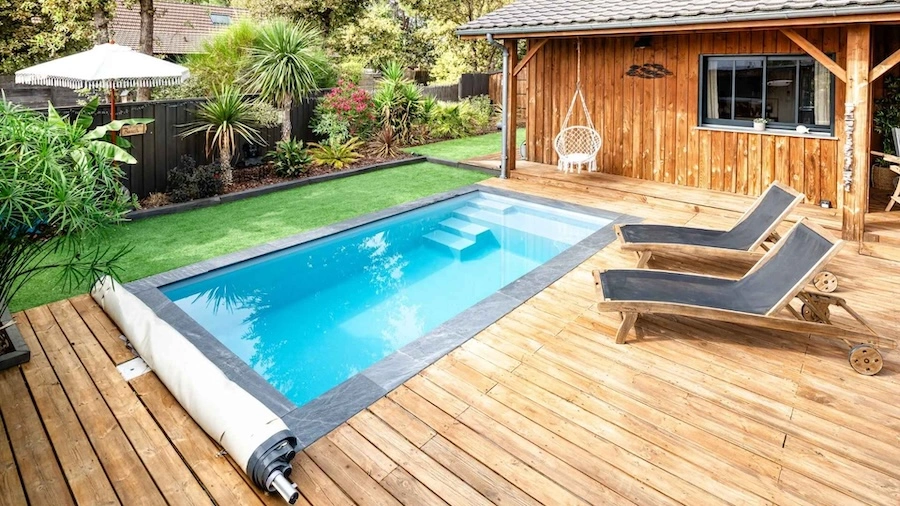
The rectangular pool remains , by far, the most popular choice in France for in-ground pools. And this popularity is no coincidence: rectangular shapes combine maximum swimming space, seamless integration into most outdoor spaces, and superior ease of maintenance.
Their right angles make it easier for the cleaning robot to operate, optimize water flow, and allow for the seamless installation of the submerged automatic cover, which covers the entire pool without any gaps.
For homeowners who want to swim laps regularly, a rectangular pool is the ideal solution:
- An 8×4-meter pool already provides a swimming lane of eight meters, which is sufficient for a comfortable daily workout.
- For gardens with limited space, a compact 5×3 m model makes for an ideal small rectangular pool for small spaces while remaining both functional and attractive.
When it comes to finishes, the rectangular shapes are compatible with the entire Aboral Piscines color palette, from Pure White to Quartz, including the exclusive Sparkle finishes.
Free-form and organic shapes: when the pool blends into the garden
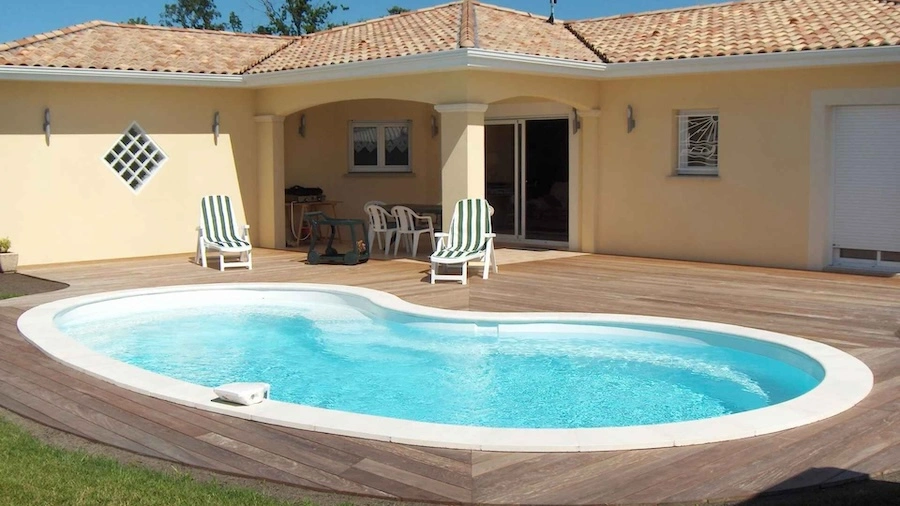
What is a free-form pool?
Free-form pools (of which the kidney-shaped pool is the most iconic example, alongside kidney-shaped and lagoon-style models) are characterized by asymmetrical curves and lack distinct right angles.
In contrast to strict geometric shapes, they draw inspiration from natural forms and give the entire outdoor space an organic, serene look. This type of pool is particularly appealing when the terrain is uneven, the garden is densely landscaped, or the homeowner wishes to create two distinct functional areas within a single pool:
- a swimming area on one side,
- one area for swimming and the other for relaxation.
This type of layout is very popular with families with young children, who thus have a space tailored to their needs without encroaching on the adults' area.
Advantages and Limitations of Organic Shapes
The key advantage of free-form pools is how well they blend into the outdoor space. They blend naturally into the surrounding vegetation and create a gentle, nature-inspired atmosphere that stands in stark contrast to the austere look of rectangular pools.
The water effects, particularly when paired with hulls in Ivory or Papyrus tones, are especially striking, with turquoise or mint-blue highlights that enhance the impression of a natural lagoon.
On the other hand, certain practical limitations must be accepted: the effective swimming area is smaller than that of a rectangular pool of the same total length. Installing an automatic cover is often not feasible with overly asymmetrical shapes, and a counter-current swimming system will require a specific technical assessment.
Round, Oval, or Square Pools: Benefits, Uses, and Differences
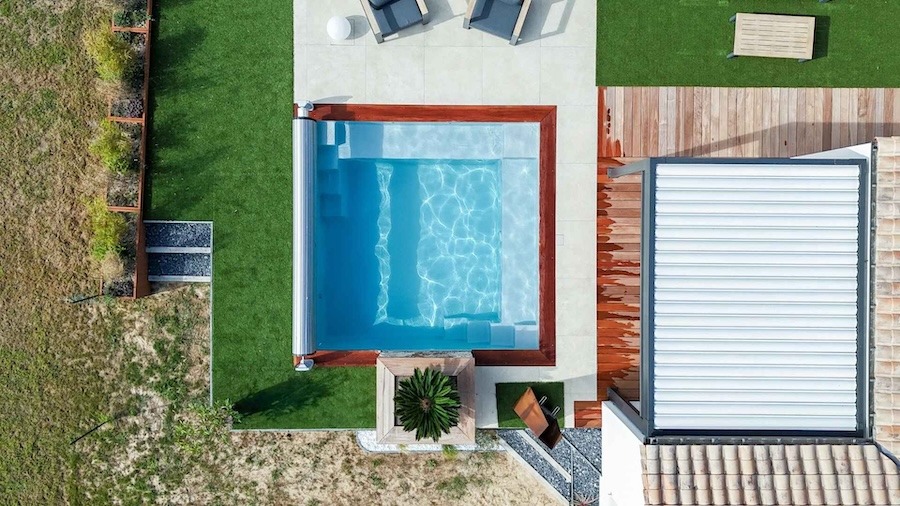
The round pool: the perfect solution for small spaces
Round pools are a type of pool that is often overlooked, but they are particularly well-suited for small gardens or projects focused on relaxation rather than competitive swimming.
Typically ranging in diameter from 3.5 to 5 meters, this is a small pool with a surface area of less than 20 square meters, designed to fit into compact spaces where a rectangular pool would not fit.
Good to know:
Ponds pools smaller than 10 m² are not subject to the development tax or the property tax surcharge; a significant tax benefit for smaller projects.
The oval pool: the middle ground between rectangular and free-form pools
Just like the round pool, the oval pool is often overlooked. Yet it offers real advantages for certain types of homeowners:
- A swimming area that is larger than a standard round pool, with smooth contours that blend seamlessly into formal or lushly landscaped gardens;
- Compatible with certain automatic shutters when dimensions permit;
In addition, the oval pool is particularly well suited to slightly sloping terrain, and can accommodate a counter-current swimming system in its longest version.
The square pool: a bold architectural choice
The square pool is the go-to choice for the most sophisticated contemporary designs. Paired with clean-lined facades, dark stone or concrete coping, and high-end finishes such as Iconic Grey or Pacific Blue from Aboral Piscines’ Sparkle collection, it blends seamlessly into a minimalist outdoor space.
It is particularly well suited for:
- Overflowing projects: the still surface of the water creates a sophisticated mirror effect .
- Contemporary architecture: maximum visual harmony with the home’s geometric forms.
- Counter-current swimming: to compensate for the pool's limited length and maintain its use for athletic purposes.
Our tips for choosing the right shape for your prefabricated pool
Choosing the right shape for a prefabricated pool is neither a matter of chance nor simply a matter of personal taste. It is a decision that must be based on a comprehensive and structured analysis of your personal circumstances and your outdoor space.
Here is the method recommended by the experts at Aboral Piscines to ensure a smooth process.
1. Assess the layout of your property
Before you start planning a design, begin by taking an objective look at your outdoor space. There are several factors to consider:
- Available space: This determines the maximum dimensions of the pool and influences the choice of certain shapes over others.
- Garden shape and layout: a long, narrow plot naturally lends itself to a rectangular pool; a more square or irregular space, or a sloped plot, offers more options for free-form designs.
- Orientation and Sun Exposure : A well-exposed pool enhances light colors and sparkling finishes, while reducing heating needs.
2. Define your primary use
Just ask yourself this simple question: What will this pool actually be used for on a day-to-day basis?
- Competitive swimming and regular laps: a rectangular swimming lane is the ideal solution. An 8×4-meter pool already provides 8 meters of continuous swimming, which is sufficient for a comfortable workout.
- Family fun with a kids' area: a kidney-shaped or free-form pool allows you to create two separate areas within the same pool.
- Combined swimming and relaxation: a counter-current swimming system in a compact rectangular pool offers an excellent solution without requiring a large pool.
3. Take budget constraints into account from the start
The type of pool you choose has a much greater impact than just price of the shell. It affects the entire project budget:
- The taxable area determines the amount of the development tax due upon establishment.
- Compatible equipment varies depending on the type of pool —such as submerged covers, robotic cleaners, and filtration systems—and some are not suitable for all setups.
It is best to take these factors into account from the design phase onward to avoid unpleasant surprises during construction.
4. Ensure consistency with your outdoor space
The shape of the pool shouldn’t just be an afterthought in your garden; it should naturally extend its character. Here are a few concrete examples:
- Contemporary architecture featuring polished concrete: a rectangular pool in Quartz or Iconic Grey for a bold, seamless mineral aesthetic.
- Whether it’s a stone house or a Mediterranean garden, an ivory-colored kidney-shaped pool complements olive trees, lavender, and natural materials.
- Infinity-edge or mirror-effect design: a square pool with a high-end Sparkle finish for a striking architectural look.
Before making your final decision, rely on visual renderings, color samples in real-world settings, and expert advice to ensure long-term aesthetic consistency.
At Aboral Piscines, we have been helping homeowners with this process for over 30 years, from the initial site survey through to the turnkey delivery of their in-ground pool.
If you’d like to see exactly what designs would work best for your outdoor space, get an accurate estimate, and move forward with your project with confidence, please don’t hesitate to contact our experts for personalized guidance. If you’re thinking about building a pool at home, the experts at Aboral Piscines are here to provide personalized, no-obligation guidance.
Share this article

You may be asking yourself these questions?
The rectangular shape is the most popular choice thanks to its optimal swimming area, compatibility with automatic submerged covers, and ease of integration into any type of garden.
The additional cost is generally modest: between 5% and 15%, depending on the complexity of the curves. The bulk of the budget is determined by the pool’s surface area and the equipment selected.
No. The automatic submerged cover is suitable for rectangular shapes and certain oval shapes. Highly asymmetrical or irregular shapes are often incompatible with this type of cover.
For a small space, a round pool (3.5 to 5 m in diameter) or a compact 4×2.5 m model allows you to enjoy a pool while maintaining the proportions of your garden.
Yes, through the Tailor Made line. It allows you to design custom-sized pools with exclusive Sparkle finishes not available on standard models.
On the same topic
Your fiberglass pool project is waiting for you!
Configure your shell pool in just a few clicks or find your nearest Aboral distributor for personalized support from start to finish.